
Did you know that up to 10% to 20% of adults struggle with blackheads?
That’s right! While blackheads are often associated with teenage years, many adults continue to deal with these tiny dark spots well into their adult life. Learning how to remove blackheads on the nose naturally at home has become essential for anyone looking for affordable and accessible skincare solutions.
Blackheads, also known as open comedones, are most common on the face, neck, chest, and back. They form when pores become clogged with excess sebum and dead skin cells. When these substances come into contact with air, they oxidize and turn black or dark gray. Although blackheads aren’t harmful, they can certainly impact your appearance and confidence.
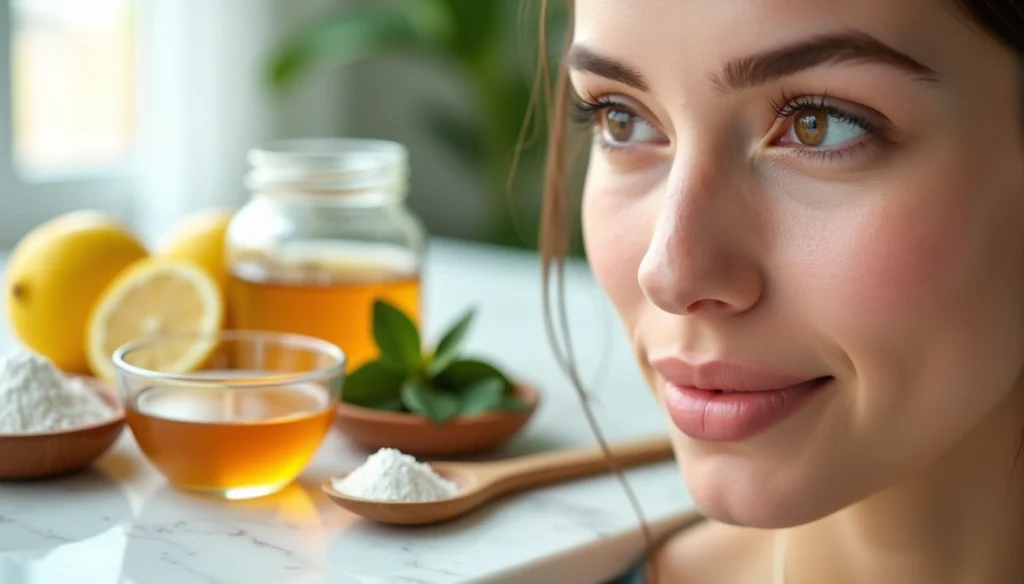
Fortunately, effective home remedies for blackheads might be right in your kitchen! Natural remedies offer a gentle alternative to harsh commercial products, often with fewer side effects. From baking soda pastes to honey masks, these natural blackhead removers can help unclog pores and reduce oiliness.
In this article, we’ll explore eight powerful kitchen ingredients and show you exactly how to remove blackheads naturally using items you already have at home. Let’s get started on your journey to clearer skin!
Read other Articles – How Many Periods in Hockey? A Complete Guide
Understanding Blackheads and Why They Form

Image Source: Dreamstime.com
Blackheads form when your skin’s natural processes go slightly awry. To effectively tackle them with kitchen remedies, we need to understand what’s happening beneath the surface.
What causes blackheads to appear
Contrary to popular belief, blackheads aren’t caused by dirt. Instead, they occur when dead skin cells and oils collect in the opening of hair follicles, producing a bump called a comedo. Each follicle contains one hair and a sebaceous gland that produces oil (sebum) to keep your skin soft. However, when these follicles become clogged and the top remains open, exposure to air causes oxidation, turning the plug black.
Several factors contribute to blackhead formation:
- Excess sebum production – When your skin produces too much oil, pores are more likely to become clogged
- Hormonal changes – Fluctuations during puberty, menstruation, or while taking birth control pills can increase oil production
- Dead skin cell buildup – When dead skin cells don’t shed normally, they mix with oil and clog pores
- Bacteria accumulation – The buildup of Propionibacterium acnes bacteria on the skin can worsen the situation
- Lifestyle factors – Smoking can contribute to non-inflammatory blemishes like blackheads
Blackheads typically appear on the T-zone of your face—forehead, nose, and chin—where the skin tends to be particularly oily. Nevertheless, they can also develop on your back, chest, neck, arms, and shoulders.
Why kitchen remedies can be effective
Kitchen ingredients work effectively against blackheads because many address the root causes of these blemishes. For instance, natural exfoliants like sugar or salt scrubs help remove dead skin cells that clog pores. Moreover, ingredients with antibacterial properties, such as tea tree oil, can prevent bacterial growth that contributes to blackheads.
Furthermore, substances like green tea contain antioxidants that help reduce oil production in your skin. Honey offers multiple benefits as it has moisturizing, anti-inflammatory, and antimicrobial properties that help reduce blackhead breakouts.
Additionally, many natural ingredients are less comedogenic (pore-clogging) than synthetic alternatives. For example, ingredients like aloe vera, olive oil, and jojoba oil are relatively less likely to block pores, making them excellent bases for homemade blackhead treatments.
8 Kitchen Ingredients That Work as Natural Blackhead Removers

Image Source: Aveeno
Your kitchen cabinet holds powerful allies in the fight against stubborn blackheads. Let me show you eight natural ingredients that effectively unclog pores and restore your skin’s smoothness.
1. Baking Soda Paste
Baking soda works primarily as a natural exfoliant thanks to its fine, salt-like granules that gently remove dead skin cells clogging your pores. Mix it with enough water to form a thick, spreadable paste. Apply using circular motions, rinse thoroughly with lukewarm water, then moisturize to prevent dryness.
2. Lemon Juice Astringent
As an astringent, lemon juice effectively “shrinks” pores that cause blackheads. Apply freshly squeezed lemon juice with a cotton ball to affected areas 3-4 times weekly before bedtime. Remember that lemon makes skin sun-sensitive, so apply sunscreen if using this remedy during summer.
3. Green Tea Scrub
Green tea reduces oil production while its antioxidants fight inflammation. For a natural blackhead remover, mix one teaspoon of dry green tea leaves with water to create a paste, then gently scrub the affected area for 2-3 minutes before rinsing.
4. Honey and Cinnamon Mask
This powerful combination works through honey’s antimicrobial properties and cinnamon’s astringent effects. Mix two tablespoons of honey with one teaspoon of cinnamon until paste-like. Apply to blackheads for 30 minutes before rinsing.
5. Aloe Vera Gel
Aloe vera functions as a natural astringent that tightens pores while cleansing and controlling oil production. Apply pure aloe gel directly to clean skin and leave overnight for best results.
6. Oatmeal and Yogurt Mix
This gentle exfoliating remedy combines oatmeal’s cleansing properties with yogurt’s natural acids. Mix two tablespoons oatmeal, three tablespoons yogurt, one tablespoon olive oil, and one tablespoon lemon juice. Apply for 15 minutes using circular motions.
7. Apple Cider Vinegar Toner
ACV contains astringent acids that balance skin pH and break up bonds between dead skin cells. Mix two tablespoons apple cider vinegar with eight ounces of water. Apply using a cotton ball after cleansing.
8. Turmeric and Milk Spot Treatment
Turmeric controls melanin production while milk’s lactic acid gently exfoliates. Combine a pinch of turmeric with warm milk to create a paste. Apply directly to blackheads and leave for 10-15 minutes before rinsing.
How to Use These Remedies Safely and Effectively

Image Source: Medical News Today
Safety first! Natural remedies might come from your kitchen, but applying them correctly makes all the difference between clear skin and potential irritation.
Patch testing before full application
Prior to using any natural blackhead remover on your face, conduct a patch test to avoid adverse reactions. Apply a small amount of the remedy to the underside of your arm or the bend of your elbow where it won’t be rubbed away. Leave it on for the same duration you’d typically use the product—about 5 minutes for rinse-off treatments or overnight for leave-on remedies. Repeat this application twice daily for 7-10 days. If no redness, itching, or swelling appears, the ingredient is likely safe for your skin.
How often to apply each remedy
Gentle exfoliating treatments like baking soda paste or green tea scrub should be limited to twice weekly. This prevents over-exfoliation while effectively removing dead skin cells that clog pores. Meanwhile, overnight treatments such as aloe vera gel can be used 3-4 times weekly. For stronger ingredients like lemon juice or apple cider vinegar, dilute properly and use no more than twice weekly. Essentially, balance is crucial—using remedies too frequently can strip natural oils, leading to increased oil production.
Combining ingredients for better results
Pairing complementary ingredients often yields better results for those seeking to remove blackheads naturally at home. Primarily, combine exfoliants (like oatmeal) with soothing agents (like honey) to balance effectiveness with gentleness. Subsequently, consider mixing antibacterial ingredients with moisturizing elements—turmeric with milk works wonderfully. Nevertheless, avoid combining multiple acidic ingredients which might irritate skin. Should you notice persistent redness, irritation, or worsening breakouts, discontinue use immediately.
Read other Articles – 15 Best Serums for Aging Skin in Your 30s (Tested in 2026)
When to Stop DIY and See a Dermatologist
Despite the effectiveness of kitchen remedies, recognizing when to seek professional help is equally important for your skin’s health.
Signs of skin irritation or worsening acne
Stop using any DIY blackhead treatment immediately if you notice:
- Throat tightness, difficulty breathing, or feeling faint
- Swelling of eyes, face, lips, or tongue
- Hives or itching (different from normal redness)
- Severe irritation or discomfort
- Persistent or worsening breakouts after several weeks
- Pain or unusual swelling
Regardless of how gentle natural remedies for blackheads seem, they can trigger unexpected reactions. Though home remedies to remove blackheads work for many, persistent problems might indicate underlying issues only a dermatologist can address.
How professionals remove blackheads safely
Dermatologists use specialized tools like comedone extractors to apply even pressure to blackheads, reducing inflammation risks. Unlike DIY attempts that might push debris further into skin, professionals can extract the entire blackhead safely.
Professional treatments often include:
- Medical-grade steam treatments to open pores
- Microdermabrasion to exfoliate and stimulate collagen
- Prescription-strength medications for stubborn cases
- Hydra-dermabrasion or laser therapy for severe conditions
Unfortunately, aggressive at-home treatments might worsen blackheads or cause scarring. Dermatologists not only treat existing blackheads but identify underlying causes, providing faster results with lower scarring risks.
Conclusion
Battling blackheads doesn’t require expensive products or harsh chemicals after all. Your kitchen cabinet holds powerful allies for unclogging pores and achieving clearer skin naturally. These eight simple ingredients—from baking soda to turmeric—offer effective solutions without the potential irritation of commercial products.
Remember, consistency remains the key to success with natural blackhead treatments. Most people notice visible improvements within 2-3 weeks when following a regular routine. Additionally, these kitchen remedies work best as part of a comprehensive skincare approach that includes proper cleansing, adequate hydration, and regular gentle exfoliation.
Safety should always come first when treating your T-zone or other blackhead-prone areas. Therefore, patch testing new ingredients prevents potential reactions, while following the recommended frequency prevents over-exfoliation. Furthermore, listening to your skin’s response helps you customize these treatments to your specific needs.
Though these natural remedies effectively address blackheads for many people, persistent problems warrant professional attention. Dermatologists can provide specialized treatments that safely extract stubborn blackheads without risking scarring or infection.
Why not start your journey toward smoother skin today? The perfect blackhead-fighting ingredient might already be sitting in your pantry, waiting to transform your skin naturally. Your path to a clearer complexion could be as simple as opening your kitchen cabinet.
FAQs
Q1. What are some effective home remedies for blackheads? Several kitchen ingredients can help remove blackheads naturally. Some effective remedies include using a baking soda paste as an exfoliant, applying lemon juice as an astringent, creating a green tea scrub to reduce oil production, and using a honey and cinnamon mask for its antimicrobial properties.
Q2. Which ingredient is most effective in drawing out blackheads? Salicylic acid is particularly effective in drawing out blackheads. It works by exfoliating the skin and dissolving dead skin cells, which helps prevent hair follicles from clogging. While not typically found in kitchens, salicylic acid can be found in many over-the-counter skincare products.
Q3. How often should I use natural remedies to treat blackheads? The frequency of application depends on the specific remedy. Generally, gentle exfoliating treatments like baking soda paste or green tea scrub should be used no more than twice weekly. Overnight treatments such as aloe vera gel can be applied 3-4 times a week. It’s important to avoid over-exfoliation, which can lead to increased oil production.
Q4. Can combining kitchen ingredients enhance blackhead removal? Yes, combining complementary ingredients can often yield better results. For example, mixing exfoliants like oatmeal with soothing agents like honey can balance effectiveness with gentleness. However, it’s important to avoid combining multiple acidic ingredients, as this might irritate the skin.
Q5. When should I stop using home remedies and consult a dermatologist? You should stop using DIY treatments and consult a dermatologist if you experience persistent redness, irritation, or worsening breakouts. Other signs to watch for include swelling of the face or eyes, hives, itching, or difficulty breathing. If blackheads persist despite consistent use of home remedies, professional help may be needed to address underlying issues.
Interested in similar content or opportunities. Contact Us