
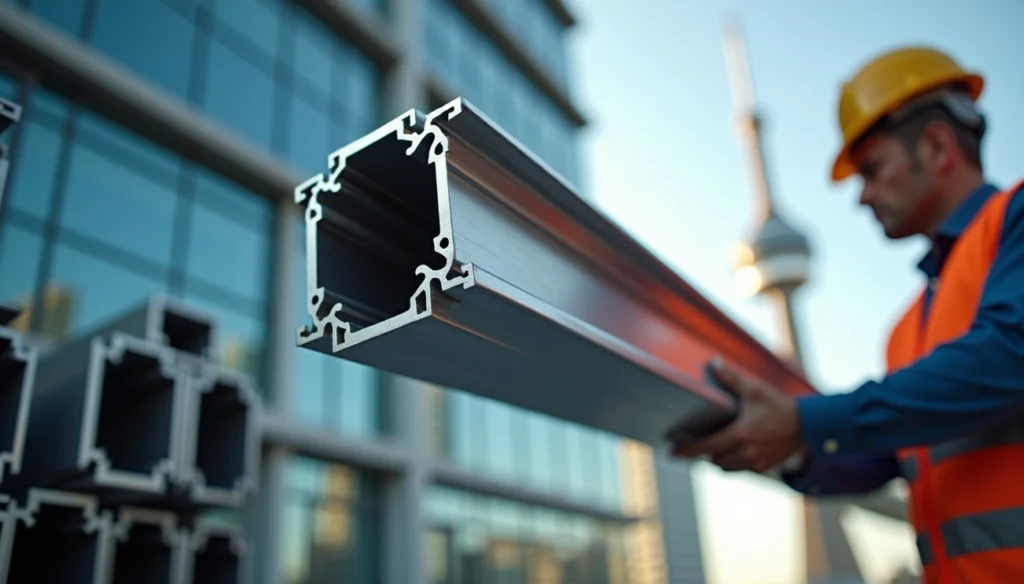

Aluminum extrusions have become a go-to solution for savvy builders in Toronto looking to gain a competitive edge in construction projects. While traditional materials still dominate the industry, custom aluminum extrusions offer impressive benefits that experienced professionals immediately recognize. The exceptional strength-to-weight ratio makes handling and installation much easier on job sites, reducing labor strain while maintaining structural integrity.
What makes aluminum extrusions the perfect balance of form and function? These custom extrusions are incredibly versatile, appearing in everything from windows and doors to railings and structural components. Additionally, working with custom aluminum extrusion suppliers speeds up manufacturing times, helping projects stay on track. While the initial investment may be higher, the long-term savings are significant due to aluminum’s natural corrosion resistance and low maintenance requirements. To explore the hidden advantages that make aluminum extrusions increasingly popular among Toronto’s building professionals, we’ve put together this guide.
The Strength-to-Weight Advantage Few Consider
When builders evaluate construction materials, the strength-to-weight ratio stands out as a critical factor—and this is where aluminum extrusions truly excel. The exceptional balance between structural integrity and lightweight properties makes aluminum a game-changer in modern construction projects throughout Toronto.
Why lightweight matters in high-rise construction
The physics of high-rise construction presents unique challenges that lightweight materials directly address. Traditional concrete, though robust, adds significant weight that drastically impacts foundation requirements and support systems. Aluminum’s superior strength-to-weight ratio allows architects to design taller, slimmer, and more ambitious buildings without compromising structural integrity.
This lightweight advantage translates into measurable benefits. Aluminum extrusions reduce the overall dead load—the building’s self-weight—which subsequently minimizes foundation requirements and material costs. Moreover, the lighter structural mass enhances seismic performance, enabling towers to absorb and dissipate movement more effectively during lateral stress events.
Beyond structural considerations, lightweight aluminum components contribute to improved thermal performance. The material’s natural insulating properties help regulate internal temperatures, reducing the burden on building systems. Consequently, this leads to better energy efficiency throughout the structure’s operational life.
Reducing labor strain and equipment needs
The practical advantages of aluminum’s lightweight properties extend beyond design principles to day-to-day construction realities. On busy Toronto job sites, aluminum extrusions require less effort to handle and maneuver, directly reducing physical demands on workers.
This ergonomic benefit creates a ripple effect of advantages:
- Reduced equipment requirements: Lighter components often eliminate the need for heavy machinery, particularly useful in confined urban environments
- Lower transportation costs: Weight optimization extends to logistics, enabling more efficient packaging and reduced shipping expenses
- Accelerated installation timelines: Construction teams can assemble lightweight components more quickly, reducing project duration
Even with its lighter weight, aluminum extrusions maintain impressive strength capabilities. Standard structural profiles can support hundreds to thousands of pounds when properly engineered. For example, 6061-T6 aluminum extrusion reaches tensile strengths of approximately 45,000 psi, making it suitable for demanding applications where both strength and weight considerations are paramount.
Unlike traditional materials, custom aluminum extrusions allow builders to optimize the weight-to-performance ratio through thoughtful profile design, creating stronger components without adding unnecessary mass.
Design Freedom That Solves Real-World Problems

Image Source: The Fabricator
Beyond structural benefits, the true genius of aluminum extrusions lies in their unparalleled design flexibility. Toronto builders frequently encounter unique challenges that standard materials simply cannot address effectively—this is where custom profiles become invaluable.
Custom aluminum extrusions vs. standard profiles
Standard aluminum profiles offer convenience through immediate availability and lower initial costs. However, they often require compromises that ultimately affect project outcomes. In contrast, custom aluminum extrusions provide precise solutions tailored to specific requirements.
The primary distinction centers on die creation—custom extrusions use dies specifically designed for unique requirements, whereas standard extrusions utilize pre-existing industry dies. This fundamental difference enables:
- Integration of channels, grooves, and attachment features impossible with standard profiles
- Optimized thickness and hollow areas that minimize weight without compromising strength
- Reduction or elimination of secondary operations like CNC machining, welding, or cutting
Furthermore, custom profiles significantly reduce material waste by matching exact specifications, improving both efficiency and sustainability.
Meeting unique architectural challenges
Architects across Toronto face increasingly complex design demands that standard materials cannot satisfy. Custom aluminum extrusions transcend traditional limitations by enabling intricate shapes and complex geometries with tight tolerances.
Especially within confined spaces like industrial or transportation projects, custom profiles excel by fitting perfectly where standard options fall short. These extrusions empower architects to create signature elements that transform functional requirements into distinctive architectural features.
Improving energy efficiency through design
Perhaps the most overlooked advantage is how thoughtfully designed aluminum profiles enhance building performance. Custom extrusions enable thermal barrier technology—creating insulating layers within profiles that prevent thermal bridging.
Properly designed aluminum systems reduce heating and cooling energy consumption, resulting in lower utility bills and smaller carbon footprints. Additionally, the thermal properties contribute significantly to energy conservation in architectural designs.
First, aluminum’s recyclability (requiring 95% less energy than new production) supports green building initiatives. Second, these profiles allow for larger, energy-efficient windows that maximize natural light while minimizing heat transfer, creating spaces that are both comfortable and sustainable.
Durability That Cuts Long-Term Costs

Image Source: Studio Aluminum
The remarkable durability of aluminum extrusions represents a major economic advantage that savvy Toronto builders recognize. With building applications achieving a 95% recycling rate, these materials deliver outstanding performance throughout their service life while minimizing environmental impact.
Corrosion resistance in Toronto’s climate
Aluminum naturally creates a protective oxide layer that shields it against environmental deterioration. This built-in defense mechanism proves especially valuable in Toronto’s variable climate, where seasonal fluctuations bring everything from summer humidity to winter freeze-thaw cycles.
Even in challenging environments like coastal regions or areas with industrial pollutants, aluminum maintains its structural integrity. Unlike steel that requires frequent painting or rust treatments, aluminum thrives in outdoor, marine, and humid industrial settings. According to experts, aluminum actually enhances its corrosion resistance during cold conditions.
Lower maintenance and replacement frequency
The maintenance requirements for aluminum extrusions remain remarkably minimal. Quality standards typically recommend cleaning operations just twice yearly, though locations with concentrated salt spray or chemical exposure may require more frequent attention.
Anodized aluminum profiles offer additional protection, extending lifespan by up to 20 years compared to other finishing methods. These finishes resist wear, UV damage, physical contact, and harsh chemicals. Properly maintained aluminum extrusions typically last 15-20 years under normal conditions.
How longevity impacts ROI
While initial construction costs represent merely a fraction of total ownership expenses, aluminum’s longevity dramatically improves return on investment. Comprehensive lifecycle management should consider:
- Operational expenses
- Repair requirements
- Staff labor costs
- System upgrades
- Utility consumption
- Recycling value
The economic equation becomes clear: extended lifespan plus low maintenance equals higher ROI. Approximately 75% of all aluminum used in construction remains in active service today, demonstrating extraordinary durability that translates directly to bottom-line benefits.
Local Sourcing and Speed: A Competitive Edge

Image Source: Custom Aluminum Products
In Toronto’s competitive construction landscape, finding reliable aluminum extrusion partners can make or break project timelines and budgets. Smart builders recognize that local sourcing provides advantages extending far beyond mere convenience.
Benefits of working with custom aluminum extrusions suppliers
First and foremost, partnering with local custom aluminum extrusions suppliers enables simplified supply chains by consolidating multi-part fabrications into fewer components. This consolidation typically reduces purchasing complexity, shortens assembly cycles, and improves quality outcomes. Ontario suppliers offer precision-engineered solutions tailored to exact specifications without sacrificing quality. These partnerships allow for:
- Cost-effective solutions minimizing tooling and labor expenses
- Enhanced performance through intentional profile design
- Direct communication for complex technical requirements
Faster lead times and design adjustments
Given that standard lead times for custom extrusions typically range from 6-12 weeks, working with nearby manufacturers can significantly compress timelines. Local suppliers often provide streamlined manufacturing processes with some of the shortest lead times in the industry. For simple profiles with existing tooling, lead times can be as short as 4-8 weeks depending on order size and plant load.
Supporting the local economy
Beyond project benefits, sourcing aluminum locally strengthens the regional economy. Canada’s 9,500 aluminum workers supply essential materials to over 700,000 American manufacturing jobs, driving $228 billion in U.S. economic output. Simultaneously, this highly integrated trade network supports jobs and prosperity on both sides of the border.
Conclusion
Aluminum extrusions stand as a transformative material choice for Toronto’s construction industry. Throughout this article, we’ve explored how these versatile profiles deliver exceptional strength while maintaining lightweight properties—a combination that significantly reduces labor strain and equipment needs on busy job sites. Additionally, the design freedom offered by custom aluminum extrusions enables architects and builders to solve complex challenges with precision-engineered solutions rather than compromising with standard profiles.
Durability remains another compelling advantage. The natural corrosion resistance of aluminum extrusions makes them particularly well-suited for Toronto’s variable climate conditions, ultimately cutting maintenance costs and extending service life. This longevity translates directly into improved ROI for building owners and developers who think beyond initial construction expenses.
Local sourcing represents yet another benefit that savvy Toronto builders have discovered. Working with nearby custom aluminum extrusion suppliers not only shortens lead times but also allows for faster design adjustments when project requirements change. Consequently, projects stay on schedule while supporting the regional economy.
Though aluminum extrusions might require higher upfront investment compared to some traditional materials, the long-term advantages far outweigh these initial costs. After all, construction professionals who incorporate these versatile components gain a significant competitive edge—delivering projects that are structurally sound, architecturally distinctive, and economically advantageous over their entire lifecycle. We believe this comprehensive understanding of aluminum extrusions’ hidden benefits will help you make more informed material choices for your next Toronto construction project.
FAQs
Q1. What are the main advantages of using aluminum extrusions in construction? Aluminum extrusions offer a unique combination of strength, lightweight properties, and corrosion resistance. They provide design flexibility, reduce labor strain, and contribute to energy efficiency in buildings. Additionally, their durability leads to lower maintenance costs and a longer lifespan compared to many traditional materials.
Q2. How do aluminum extrusions benefit high-rise construction in Toronto? In high-rise construction, aluminum extrusions’ excellent strength-to-weight ratio allows for taller and slimmer designs without compromising structural integrity. They reduce the overall dead load of buildings, minimize foundation requirements, and enhance seismic performance. The material’s natural insulating properties also contribute to improved thermal efficiency in tall structures.
Q3. What makes custom aluminum extrusions more advantageous than standard profiles? Custom aluminum extrusions offer precise solutions tailored to specific project requirements. They allow for the integration of unique features, optimize material usage, reduce waste, and often eliminate the need for secondary operations. This customization enables architects and builders to address complex design challenges and create distinctive architectural elements.
Q4. How do aluminum extrusions contribute to long-term cost savings? While initial costs may be higher, aluminum extrusions offer significant long-term savings. Their durability and corrosion resistance, especially in Toronto’s variable climate, lead to lower maintenance requirements and less frequent replacements. The material’s longevity, combined with its recyclability, results in a higher return on investment over the building’s lifecycle.
Q5. What are the benefits of sourcing aluminum extrusions locally in Toronto? Working with local custom aluminum extrusion suppliers in Toronto offers several advantages. It allows for shorter lead times, faster design adjustments, and more direct communication for complex technical requirements. Local sourcing also simplifies supply chains, potentially reducing costs, and supports the regional economy by creating jobs and fostering industry growth.
People also read: Carla Diab Net Worth 2026: The Untold Story Behind Her Fashion Empire