
Dealing with VAT on EU imports can be a complex maze for eCommerce sellers. The IOSS number meaning is straightforward yet powerful—it’s your key to simplified VAT compliance when selling low-value goods to EU customers.
Introduced in July 2021, the Import One Stop Shop (IOSS) is a VAT collection system that allows sellers to register in just one EU country to handle VAT on all B2C imports valued up to €150. What is an IOSS number? It’s essentially your identifier in this system, enabling IOSS registration and streamlining IOSS VAT reporting requirements. When using this system, VAT is collected at the point of sale, therefore customers won’t face unexpected charges upon delivery.
Importantly, the IOSS applies specifically to business-to-consumer shipments valued at €150 or less. For sellers—especially those outside the EU—this means reduced administrative burden and faster customs clearance. Goods sold under IOSS move through a ‘green lane’ at customs, enabling speedier delivery to your customers. In addition, this system helps create a level playing field for both EU and non-EU retailers.
In this comprehensive guide, we’ll walk you through everything you need to know about the IOSS number, from registration requirements to daily operations and compliance obligations.
Understanding the IOSS Number and Its Role in EU VAT

Image Source: eClear
The IOSS number serves as your digital passport for EU VAT compliance on cross-border sales. This unique identifier unlocks a streamlined approach to handling import VAT obligations, making it crucial for ecommerce merchants selling into the European Union.
What is an IOSS number and how it works
The IOSS number is a unique 12-digit VAT identification number issued after registration with the Import One-Stop Shop scheme. This identifier must appear on customs declarations for all qualifying shipments to EU consumers. Furthermore, if you use carriers or logistics partners, you must provide them with this number to ensure proper customs clearance.
How does it work? The IOSS system creates a “green channel” for quick customs clearance. Rather than collecting VAT at the border, merchants collect it directly at checkout. This approach eliminates unexpected charges for customers upon delivery and accelerates the shipping process. The VAT collected is then reported through monthly IOSS returns submitted via your country of registration.
IOSS number vs OSS and MOSS explained
These three systems serve different purposes within the EU VAT framework:
MOSS (Mini One-Stop-Shop) was the predecessor to OSS, introduced in 2015 specifically for telecommunication, broadcasting, and digital services. It has now been replaced entirely.
OSS (One-Stop-Shop) handles VAT for intra-EU transactions—goods already within the EU at the point of sale. This applies to EU distance selling rules.
IOSS (Import One-Stop-Shop) focuses exclusively on imports—goods located outside the EU at the time of sale. It applies only to shipments valued at €150 or less and facilitates centralized VAT collection for these low-value imports.
When is an IOSS number required for ecommerce sellers
You’ll need an IOSS number if:
- You sell goods valued at €150 or less per shipment to EU consumers
- Your goods are located outside the EU when sold
- You’re shipping directly to consumers (B2C), not businesses
- The goods aren’t subject to excise duties (alcohol, tobacco, etc.)
Moreover, while registration is voluntary, not mandatory, opting out means your customers may face additional fees and customs delays. Non-EU businesses, including those in the UK following Brexit, must appoint an EU-established intermediary to register for IOSS.
If you sell through marketplaces like Amazon or eBay, they often handle IOSS registration and provide their marketplace IOSS number for your shipments.
Why the IOSS Scheme Was Introduced by the EU
In July 2021, the European Union introduced significant changes to its VAT rules, transforming the landscape of cross-border ecommerce. These reforms were designed to address long-standing challenges that had complicated trade and created imbalances in the European market. By implementing these changes, the EU aimed to streamline VAT processes, ensuring fairer competition and more efficient handling of cross-border transactions.
The end of the €22 VAT exemption
Previously, goods imported into the EU valued at €22 or less were exempt from VAT. This exemption, once intended to reduce administrative burden, became problematic over time. According to the European Commission, this loophole cost the EU budget approximately €7 billion annually in unpaid duties and import VAT. Consequently, in July 2021, the EU abolished this exemption, making all commercial goods imported into the EU subject to VAT regardless of value.
Challenges with pre-IOSS customs and VAT collection
Before IOSS, the system created multiple complications:
- Unfair price advantage for non-EU sellers who could ship goods VAT-free
- Widespread fraud through deliberate undervaluation of goods to avoid VAT
- Excessive customs checks creating delays and confusion
- Complicated administration with different thresholds across 27 EU countries
The volume made enforcement nearly impossible, with over 150 million small consignments entering EU member states annually. Additionally, consumers often faced unexpected charges upon delivery, creating a negative shopping experience.
How IOSS improves fairness for EU and non-EU sellers
The IOSS system addresses these challenges by creating a level playing field. Now, sellers charge VAT at checkout based on the destination country’s rate. This approach offers multiple advantages:
- Simplified registration through a single EU member state
- Faster customs clearance without VAT-related delays
- Transparent pricing for consumers with no surprise fees
- Reduced administrative burden for businesses
By 2023, this system was processing significant volume, with VAT declarations through IOSS reaching over €26.3 billion, representing a 35% year-on-year increase.
Step-by-Step IOSS Registration Process for Sellers
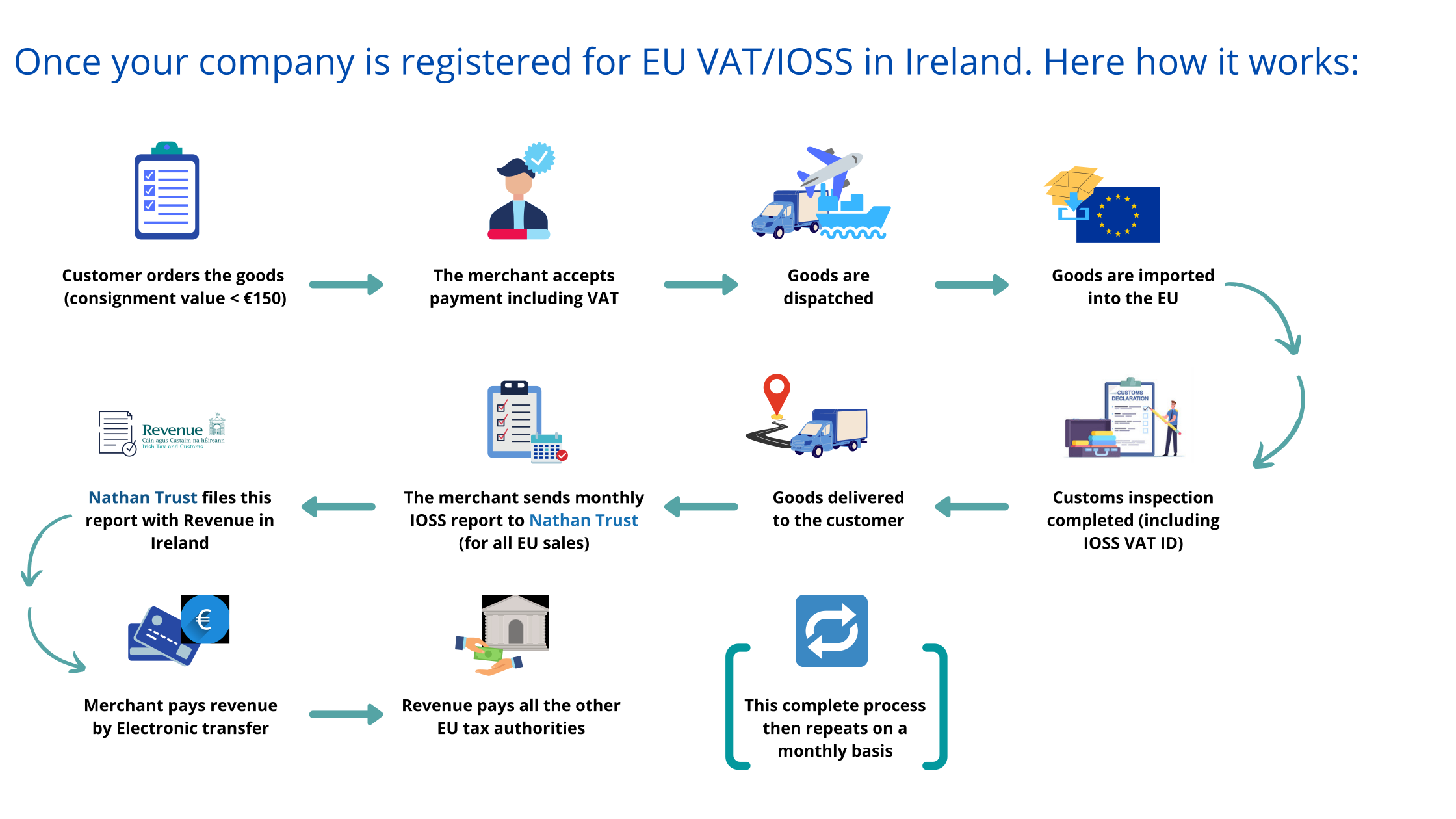
Image Source: Nathan Trust
Registering for IOSS involves several clear steps that vary depending on your business location. This process, albeit straightforward, requires attention to specific eligibility criteria and documentation requirements.
Eligibility criteria for EU and non-EU businesses
EU-based businesses can register directly through their national tax authorities. Non-EU sellers, however, must appoint an EU-established intermediary unless they’re based in countries with VAT mutual assistance agreements with the EU (currently only Norway). Eligibility applies specifically to:
- B2C sales of goods valued under €150 per shipment
- Goods located outside the EU at the time of sale
- Items not subject to excise duties
How to appoint an EU intermediary for IOSS
For non-EU businesses, an intermediary acts as your fiscal representative within the EU. When selecting an intermediary, consider their experience with IOSS and industry knowledge. Upon appointment, they’ll handle registration, monthly returns, and communication with tax authorities. Importantly, intermediaries assume joint liability for any unpaid VAT.
Documents required for IOSS registration
Initial registration requires comprehensive business documentation:
- Legal company name and registration details
- Business address and contact information
- Responsible person’s identification
- VAT number (if applicable)
- EORI number (if applicable)
Where to register: National portals and intermediaries
EU businesses register through their home country’s tax portal. Non-EU companies can choose any EU member state based on factors like language preferences. Upon successful registration, you’ll receive a unique IOSS number formatted as IMxxxyyyyyyz, where ‘xxx’ represents the country code.
Using the IOSS Number in Daily Operations

Image Source: Do Dropshipping
After securing your IOSS number, implementing it correctly in daily operations is vital for smooth EU ecommerce sales. Proper implementation enables efficient VAT handling while ensuring compliant cross-border transactions.
Displaying VAT at checkout using IOSS
Once registered for IOSS, you must display VAT transparently during checkout. This means showing the applicable local VAT rate included in the listed price. For instance, UK customers should see products with 20% VAT incorporated. Simultaneously, your checkout system must automatically calculate and display the correct VAT amount based on the customer’s EU destination. This transparency eliminates surprise fees upon delivery, immediately improving customer satisfaction.
Including IOSS number in customs declarations
Your IOSS number must be included in all customs declarations for eligible shipments. This critical identifier allows goods to move through the “green lane” at customs. Indeed, omitting this number from customs documentation (typically entered in box 44) risks double taxation or delivery delays. When working with carriers or logistics partners, securely communicate your IOSS number to ensure proper inclusion in electronic customs data.
Monthly IOSS VAT return filing requirements
IOSS participants must submit monthly VAT returns by the last day of the month following each tax period. These returns must include:
- Total VAT collected per EU country
- Number of sales by destination
- Any adjustments or returns
Notably, even during periods without sales, you must submit “nil returns”. Failing to file three consecutive returns results in automatic exclusion from the scheme for a minimum of two years.
Record-keeping and audit compliance for IOSS
Maintain comprehensive records of all IOSS transactions for ten years from the end of the year in which the sale occurred. These records must include:
- Sales data with customer details
- Applied VAT rates with calculations
- Shipping documentation
- Customs declaration data
Such meticulous record-keeping supports potential audits by EU tax authorities. Insufficient records can result in disqualification from the IOSS scheme, forcing you back into country-by-country VAT registration.
Conclusion
The IOSS system fundamentally changes how eCommerce sellers handle EU VAT obligations. Rather than navigating 27 different tax systems, sellers can now register once and fulfill all their import VAT requirements through a single channel. This streamlined approach offers clear benefits for both merchants and customers alike.
Understanding your IOSS number remains essential for successful cross-border selling into the European Union. Without question, this 12-digit identifier serves as your passport through EU customs, enabling faster clearance and preventing unexpected charges for your customers. Additionally, the system creates genuine fairness between EU and non-EU sellers, ensuring everyone operates under identical VAT rules regardless of location.
Sellers should carefully evaluate whether IOSS registration makes sense for their business model. Though voluntary, the advantages often outweigh the administrative requirements. Faster deliveries, transparent pricing, and simplified compliance typically translate into higher customer satisfaction and increased sales volume.
Non-EU businesses must remember the intermediary requirement unless based in Norway. Finding a reliable fiscal representative constitutes a critical step in the registration process. Afterward, proper implementation in daily operations—from checkout displays to customs declarations—ensures smooth sailing through the EU’s regulatory waters.
The monthly reporting and decade-long record-keeping obligations might seem demanding at first glance. Therefore, establishing robust internal processes early will save significant headaches during potential audits. Many eCommerce platforms now offer built-in IOSS support, making technical implementation considerably easier than when first introduced.
IOSS represents just one component of the EU’s broader eCommerce VAT reform package. Still, it stands as perhaps the most impactful change for sellers shipping goods valued under €150 from outside the European Union. Mastering this system unlocks smoother operations and happier customers—two goals every eCommerce business certainly shares.
FAQs
Q1. What is an IOSS number and why is it important for e-commerce sellers? An IOSS (Import One-Stop Shop) number is a unique 12-digit identifier for e-commerce sellers shipping goods valued up to €150 to EU customers. It simplifies VAT collection and customs clearance, allowing sellers to register in one EU country for VAT purposes across all member states.
Q2. How does the IOSS system benefit online retailers and customers? The IOSS system streamlines VAT compliance, enabling faster customs clearance and eliminating unexpected charges for customers. It creates a level playing field for EU and non-EU sellers, simplifies registration, and reduces administrative burdens for businesses selling low-value goods to EU consumers.
Q3. Is IOSS registration mandatory for all e-commerce sellers? While IOSS registration is voluntary, it’s highly recommended for sellers shipping goods valued under €150 to EU customers. Opting out may result in additional fees and customs delays for customers. Non-EU businesses, except those in countries with specific agreements, must appoint an EU-established intermediary to register.
Q4. What are the key responsibilities of an IOSS-registered seller? IOSS-registered sellers must display VAT at checkout, include their IOSS number in customs declarations, file monthly VAT returns, and maintain comprehensive records for ten years. They need to ensure proper VAT collection based on the customer’s destination country and submit returns even during periods without sales.
Q5. How does IOSS differ from other EU VAT schemes like OSS and MOSS? IOSS specifically handles VAT for imports of low-value goods (up to €150) from outside the EU. OSS deals with intra-EU transactions for goods already within the EU, while MOSS (now replaced) was for digital services. IOSS focuses on simplifying VAT collection for cross-border e-commerce imports into the EU.
People also read: Carla Diab Net Worth 2026: The Untold Story Behind Her Fashion Empire