
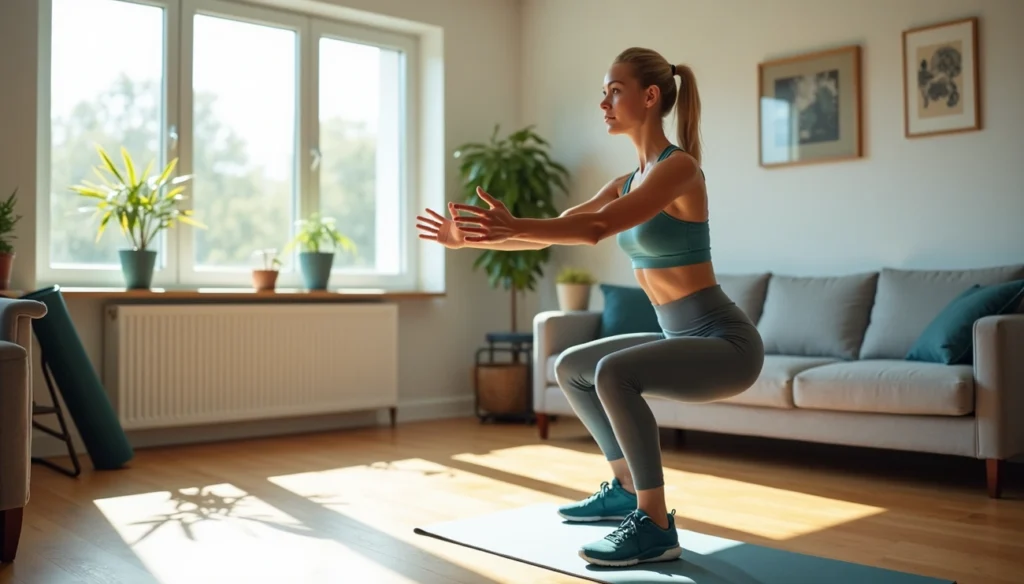

Did you know that a 20-minute bodyweight workout can provide a more effective training stimulus than running on a treadmill at 85% of your maximum heart rate for the same amount of time?
That’s right—an equipment-free home workout can be incredibly efficient for building strength and burning fat. Bodyweight exercises are a form of resistance training that challenge your muscles, promoting strength, adaptation, and growth. In fact, you can build muscle mass through bodyweight training as long as you apply the principle of progressive overload.
We’ve created this beginner-friendly guide because we understand how challenging it can be to start a fitness routine without fancy equipment. Whether you’re working out at home due to budget constraints or simply prefer the convenience, these methods can be just as effective when done correctly. The Physical Activity Guidelines for Americans recommend at least 150 minutes of moderate-intensity exercise per week, and a beginner bodyweight workout can help you meet these guidelines easily.
In this article, we’ll show you how to craft a complete workout routine using just your body weight for resistance. We’ll also explain how to perform these exercises 2-4 times a week (with 48 hours of rest between sessions) to maximize your results. These routines typically take only 15-20 minutes to complete, making them perfect for even the busiest schedules.
Ready to get fit using only your body? Let’s dive in!
Why Home Workouts Without Equipment Work
Many people wonder if they can truly get fit without fancy gym equipment. According to research published in the journal Physiology and Behavior, bodyweight exercise effectively builds muscle “independent of an external load”. This scientifically validates what many fitness enthusiasts already know – your body doesn’t recognize the difference between pushing iron or pushing against gravity.
Bodyweight training vs. gym workouts
Your muscles respond to tension, not the source of that tension. When researchers compared push-ups to bench presses, they found both exercises resulted in similar strength and muscle gains. Furthermore, a Japanese study of adults in their 60s revealed that simple bodyweight exercises increased muscle strength and power by approximately 15% after 10 months – with participants doing only six workouts per month.
Most bodyweight exercises involve compound movements that engage multiple muscle groups simultaneously, making them more functional and efficient than many isolated machine exercises. Indeed, these movements better mimic everyday activities, improving your real-world strength and mobility.
Benefits for beginners and busy people
The most compelling advantage of equipment-free workouts is their accessibility. Since you always have your body with you, you can exercise anywhere and anytime. Moreover, this eliminates common excuses like “I don’t have time to go to the gym” or “I don’t have space for equipment at home”.
For beginners, bodyweight exercises offer a safe starting point. As one fitness coach explains, “Bodyweight exercises are good beginner workouts because you don’t need to know how to use different equipment. You’re doing what your body is designed to do”.
Common myths about no-equipment workouts
Despite their effectiveness, several misconceptions persist:
- Myth: You can’t build muscle without weights. Studies show bodyweight exercises, when done properly and progressively, can be just as effective for muscle growth as gym-based resistance training.
- Myth: There’s no way to increase difficulty. You can make exercises harder by changing leverage, modifying range of motion, or adding pauses between movement phases.
- Myth: You can’t get a cardio workout. Adding plyometric elements to bodyweight exercises quickly elevates your heart rate for effective cardiovascular training.
Read other Articles – How to Manage Remote Teams in a Way That Actually Works
How to Prepare for Your First At-Home Workout
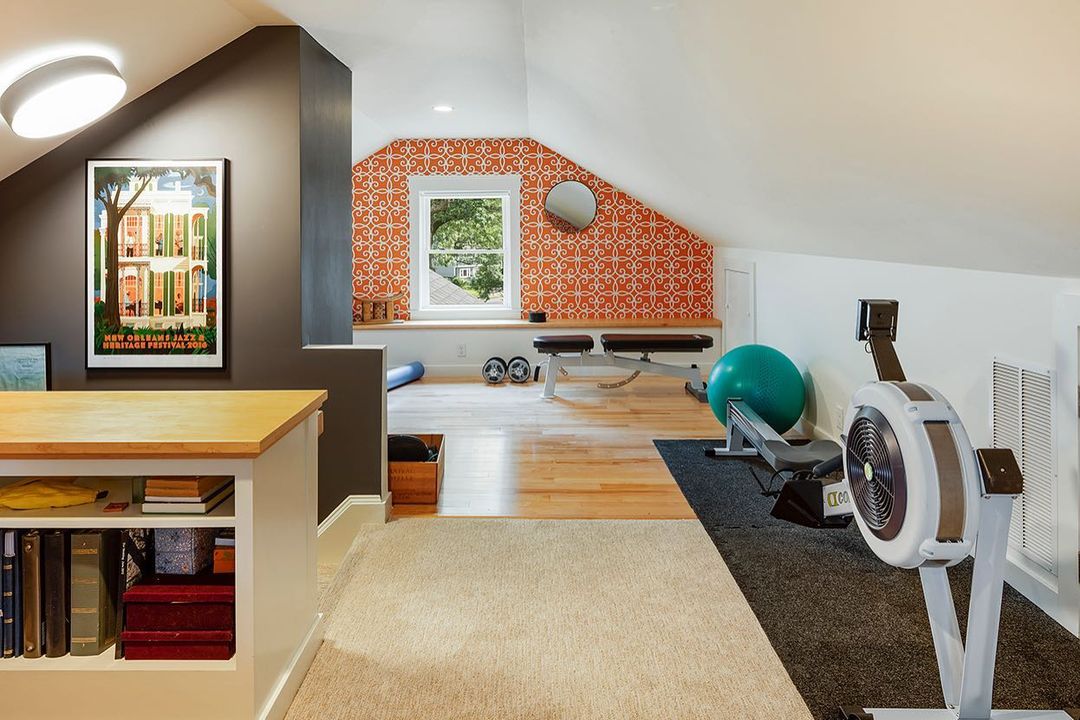
Image Source: Extra Space Storage
Setting up properly for your first home workout can make the difference between an effective session and a frustrating experience. With some simple preparations, you’ll be ready to maximize your results without any equipment.
Create a safe workout space
First, identify an area in your home that gives you enough room to move freely. You’ll need approximately 6-10 feet of space to move side to side and back and forth. Clear away any furniture, toys, or other potential hazards that could cause injury. Even though you’re not using equipment, having a clutter-free area is essential for safety and proper form.
Next, ensure your workout area has good ventilation – open a window or use a fan to maintain airflow, especially for intense sessions. Additionally, keep water and a towel nearby to stay hydrated and comfortable throughout your workout.
What to wear and what to avoid
For home workouts without equipment, comfort should be your priority. Wear breathable, moisture-wicking clothes that allow unrestricted movement. Although you might be tempted to exercise in pajamas or everyday clothes, these aren’t designed for workouts and can cause chafing or limit mobility.
Opt for proper athletic footwear that provides support, particularly for exercises involving jumping or lateral movements. However, for low-impact exercises like yoga, going barefoot is perfectly acceptable.
Simple warm-up routine to get started
Before diving into your main workout, spend 5-10 minutes warming up to prepare your muscles and prevent injury. A proper warm-up raises your heart rate gradually and increases blood flow to your muscles.
Try this simple warm-up sequence:
- March in place for 3 minutes, pumping your arms to elevate your heart rate
- Perform 60 seconds of heel digs, placing alternate heels to the front
- Complete 30 knee lifts, bringing alternate knees up to touch the opposite hand
- Do 10 shoulder rolls forward and backward while continuing to march
- Finish with 10 knee bends, standing with feet shoulder-width apart
Remember that warming up isn’t optional—it’s an essential part of any effective workout routine.
Beginner Home Workout Without Equipment: Full Routine

Image Source: YouTube
Now that your space is ready, let’s get moving with this effective full-body routine. Perform each exercise for 10-15 reps (or 30 seconds for holding exercises), rest for 30 seconds between exercises, and complete 2-3 rounds of the entire circuit.
1. Bodyweight squats
Stand with feet shoulder-width apart, toes slightly turned out. Bend your knees and push your hips back as if sitting in a chair. Keep your chest up and back straight. Press through your heels to return to standing position. This foundational exercise strengthens your quads, glutes, and hamstrings.
2. Knee push-ups or wall push-ups
For knee push-ups: Start on all fours, hands under shoulders. Lower your chest toward the floor while keeping elbows at a 45-degree angle. Push back up. Wall push-ups offer an easier alternative if needed.
3. Glute bridges
Lie on your back with knees bent, feet flat on floor. Press through your heels, squeezing your glutes to lift your hips until your body forms a straight line from shoulders to knees. Hold for 2 seconds at the top.
4. Bird-dog
Start on all fours with wrists under shoulders and knees under hips. Simultaneously extend your right arm forward and left leg backward while maintaining a flat back. Return to start position and alternate sides.
5. Forearm plank
Position your forearms on the ground, elbows under shoulders. Extend your legs and lift your body, forming a straight line from head to heels. Engage your core and hold.
6. Walking lunges
Step forward with your left leg and lower into a lunge position. Push through your left heel to bring your right foot forward into the next lunge. Continue alternating legs.
7. Side-lying leg raises
Lie on your side with legs stacked. Lift your top leg up about a foot higher than the bottom leg, then pulse up 10 times. Repeat on the other side.
8. Jumping jacks or low-impact jacks
For low-impact modification: Step one foot out to the side as you raise your arms overhead, then step back to center. Repeat on the opposite side.
Disclaimer: Consult your physician before beginning any exercise program, particularly if you have any medical conditions or injuries.
Read other Articles – How to Monetize a Tech Blog in 2026 and Build a Proven $10K per Month Blueprint
How to Stay Consistent and Progress Over Time

Image Source: Notion
Establishing a sustainable routine is the key to seeing real results from your home workouts. Staying on track doesn’t require complicated systems – just a few proven strategies.
How often to work out each week
For optimal results, practice your bodyweight routine 2-4 times weekly, allowing 48 hours between sessions for muscle recovery. The CDC recommends adults aim for at least 150 minutes of moderate-intensity activity per week. This could mean 30 minutes of exercise five days a week or dividing your workouts differently across your schedule. Remember, muscles don’t build during exercise – they develop during rest periods.
Tracking your reps and sets
Recording your workouts creates accountability and reveals progress patterns. Note your maximum rep count for each exercise, along with how long you hold static positions like planks. Additionally, assess your form through video recordings periodically. This practice helps identify improvements in technique, control, and execution over time.
When and how to increase difficulty
Progress requires systematically challenging yourself. Try these approaches:
- Increase volume by adding 10-20% more reps or sets
- Use “ladder technique” – perform 1 rep, rest briefly, do 2 reps, rest, then 3 reps
- Slow down movement tempo to increase time under tension
- Modify your base of support to decrease stability
Mixing in cardio or yoga on rest days
Active recovery enhances overall fitness. Consider following this pattern: strength training one day, walking/yoga the next, then back to strength. Incorporating yoga 1-2 times weekly helps protect joints and muscles from overtraining. This balanced approach ensures continuous improvement while preventing burnout.
Disclaimer: Consult your healthcare provider before starting any new exercise program, especially if you have existing health conditions.
Conclusion
Embarking on a fitness journey requires nothing more than your determination and your body as the ultimate exercise tool. Throughout this guide, we’ve discovered that bodyweight workouts effectively build strength and burn fat without expensive equipment or gym memberships. Additionally, these workouts offer unmatched accessibility, allowing you to exercise anywhere and anytime.
Most importantly, science confirms what many fitness professionals already know – your muscles respond to tension regardless of its source. Therefore, pushing against gravity can build muscle just as effectively as pushing iron weights. The full-body routine we’ve outlined takes just 15-20 minutes to complete, making it perfect for even the busiest schedules.
Remember, consistency trumps intensity when starting your fitness journey. By following the recommended 2-4 weekly sessions with proper recovery time, you’ll establish sustainable habits that lead to lasting results. Similarly, tracking your progress and gradually increasing difficulty ensures continuous improvement without plateauing.
After all, the most effective workout is the one you’ll actually do. The beauty of equipment-free training lies in its simplicity – you already have everything you need to start right now. So clear some space, put on comfortable clothes, and take that first step toward a stronger, healthier you. Your body is waiting to show you what it’s capable of!
FAQs
Q1. Can I really get fit at home without any equipment? Yes, you can definitely get fit at home without equipment. Bodyweight exercises are a form of resistance training that can effectively build strength and burn fat. With proper form and consistency, you can achieve significant fitness improvements using just your body weight for resistance.
Q2. How often should I do these home workouts? For optimal results, aim to perform your bodyweight workout routine 2-4 times per week. Allow at least 48 hours between sessions for muscle recovery. This frequency helps you meet the recommended 150 minutes of moderate-intensity activity per week while giving your body time to adapt and grow stronger.
Q3. Will I be able to build muscle with bodyweight exercises? Absolutely. Research shows that bodyweight exercises can be just as effective for muscle growth as gym-based resistance training when done properly and progressively. By applying the principle of progressive overload and consistently challenging yourself, you can successfully build muscle mass through bodyweight training.
Q4. How long should my home workout sessions last? A typical beginner home workout without equipment can be completed in about 15-20 minutes. This makes it perfect for even the busiest schedules. Remember, consistency is more important than duration, especially when you’re just starting out.
Q5. How can I make my bodyweight exercises more challenging over time? There are several ways to increase the difficulty of bodyweight exercises:
- Increase the number of repetitions or sets
- Slow down the movement tempo to increase time under tension
- Use the “ladder technique” – gradually increasing reps with brief rests in between
- Modify your base of support to decrease stability These methods help ensure continuous improvement and prevent plateaus in your fitness journey.
Disclaimer
Consult your physician before beginning any exercise program, particularly if you have any medical conditions or injuries. This article is for informational purposes only and is not intended as medical advice.
Interested in similar content or opportunities. Contact Us