
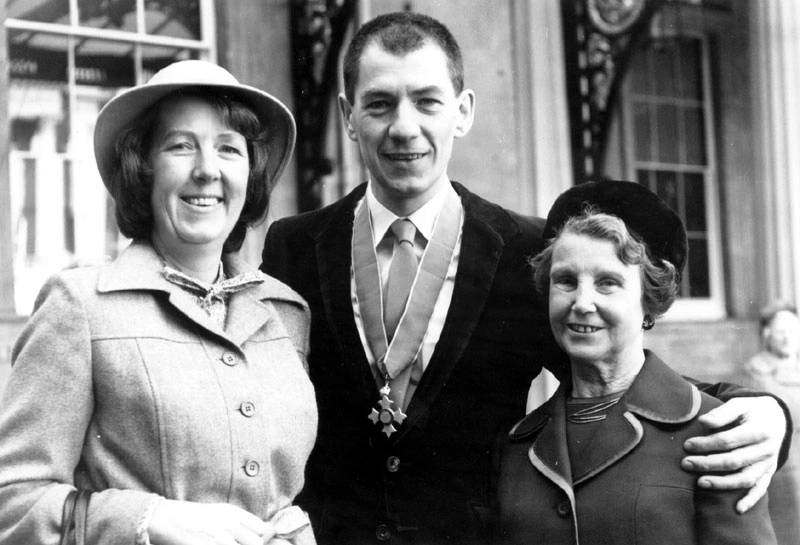

Jean McKellen was born on May 20, 1934, in Watford, England, five years before her brother, Sir Ian McKellen, would become one of the most celebrated actors of our time. While she lived largely in the shadow of Sir Ian’s fame, Jean was much more than just his older sister—she was his earliest teacher, guide, and artistic influence.
When we admire the remarkable career of Sir Ian McKellen, we often overlook the pivotal role Jean played in shaping his theatrical journey. One of the most significant moments in Ian’s life occurred when he watched her perform as Nick Bottom in A Midsummer Night’s Dream during a school play. While Ian went on to achieve global fame through iconic roles in The Lord of the Rings and X-Men franchises, it was Jean who first introduced him to the magic of Shakespeare and live performance.
In this article, we’ll explore Jean McKellen’s own remarkable theatrical contributions, particularly her 17-year dedication to the Nayland Village Players, where she served as an actress, director, producer, and mentor. We’ll also examine how her passion for theater not only inspired her famous brother but also enriched the lives of countless individuals in the communities she touched.
Early Life and Family Background
In the small town of Watford, Hertfordshire, the McKellen family welcomed their first child, Jean Lois McKellen, on May 20, 1934. The world she was born into would soon be dramatically transformed as World War II erupted just a few years later, reshaping the childhood experiences of an entire generation.
Childhood during wartime Britain
The McKellen family moved to northern England, eventually settling in Wigan, a coal-mining town in south Lancashire. Growing up amid the uncertainty of war, Jean experienced the realities of air-raid sirens, rationing, and disrupted daily life. Her younger brother Ian, born five years after her in 1939, even slept under an iron bomb-proof table in the dining room during his earliest years.
Nevertheless, within these challenging circumstances, the McKellen children found stability through family traditions and creative pursuits. Jean’s resilient spirit was forged during these formative years, instilling qualities that would later define her approach to both theater and education.
The McKellen household: faith, books, and creativity
The McKellen home environment profoundly shaped both siblings’ worldviews. Their father, Denis Murray McKellen, worked as a civil engineer and lay preacher, while their mother Margery Lois Sutcliffe managed their household with a keen appreciation for literature and amateur theater.
Furthermore, faith played a central role in family life. The household embodied Christian values that were notably liberal and open-minded, encouraging compassion, community service, and creative expression. Sundays meant church attendance, with young Ian attending morning service at Hope Street Congregational Church and afternoon Sunday School.
Books filled their modest four-bedroomed semi-detached house, creating an intellectually rich atmosphere where storytelling, moral reflection, and artistic exploration flourished. This combination of engineering precision from their father and artistic sensibility from their mother created a uniquely nurturing environment.
Jean’s early interest in theater
Jean’s passion for theater emerged early. Her involvement began with school productions, where she developed her natural talents for performance. One particularly significant role was playing Bottom in Shakespeare’s A Midsummer Night’s Dream at Wigan High School for Girls.
This performance proved pivotal—young Ian sat in the audience, mesmerized by his sister’s presence on stage. Consequently, Jean became instrumental in introducing her brother to Shakespeare, taking him to his first plays including Twelfth Night and Macbeth performed by Wigan’s Little Theater.
Her early theatrical involvement established the foundation for what would become a lifelong dedication to the stage and a profound influence on one of Britain’s most celebrated actors.
Jean’s Influence on Ian McKellen

Image Source: Journal Magazine
The artistic bond between siblings Jean and Ian McKellen would ultimately shape one of the most distinguished careers in theatrical history. As Ian’s senior by five years, Jean became his earliest guide into the transformative world of performance and storytelling.
Introducing Ian to Shakespeare
Jean’s genuine enthusiasm for Shakespeare proved contagious to her young brother. Beyond merely introducing Ian to the Bard’s work, she made these complex plays accessible and exciting for him. Initially, Jean took Ian to see productions at Wigan’s Little Theater, where local actors brought Twelfth Night and Macbeth to life on stage. These formative experiences planted seeds that would blossom throughout Sir Ian McKellen’s illustrious career, wherein Shakespearean roles became his signature performances.
“I still remember how Jean would recite passages from Shakespeare’s plays,” Ian once recalled. “Her voice made the language sing in ways that made even the most complex passages crystal clear to me as a child.”
The school play that changed everything
Certainly, the pivotal moment in young Ian’s theatrical awakening came while watching Jean perform as Nick Bottom in A Midsummer Night’s Dream at Wigan High School for Girls. Sitting in the audience, the impressionable boy witnessed his sister command the stage with confidence and skill. This singular experience ignited a spark that would grow into a lifelong passion.
The transformation Jean underwent—from familiar sister to powerful performer—demonstrated to Ian the magical possibilities of acting. This realization would stay with him throughout his journey from amateur productions to becoming one of Britain’s most celebrated actors.
How Jean shaped Ian’s love for acting
Moreover, Jean’s influence extended beyond those early introductions. She consistently encouraged Ian’s theatrical interests, offering guidance, constructive criticism, and unwavering support. Unlike many family members who might have discouraged acting as an impractical career choice, Jean recognized and nurtured her brother’s natural talents.
Subsequently, this sibling mentorship established a foundation of theatrical understanding upon which Ian would build his extraordinary career.
Jean McKellen’s Own Theater Career

Image Source: Journal Magazine
Behind the scenes of Ian McKellen’s rise to stardom, Jean built a remarkable theatrical career of her own. Throughout her life, she remained dedicated to community theater, sharing her passion with countless aspiring actors and audiences alike.
Acting in amateur productions
Jean’s personal journey in theater began with local amateur productions in Lancashire. After moving to Suffolk, she continued pursuing her love for performance, taking on diverse roles that showcased her versatility as an actress. Unlike her brother who sought professional fame, Jean found fulfillment in community theater, where she could connect directly with local audiences.
Directing and producing local plays
Beyond acting, Jean excelled as a director and producer. She had a natural talent for bringing out the best in amateur actors and translating complex theatrical works for community audiences. Her productions were known for their attention to detail and emotional depth, often rivaling professional theater in quality and impact.
Her work with Nayland Village Players
Perhaps Jean’s greatest theatrical legacy was her 17-year dedication to the Nayland Village Players. Here, she served as both performer and artistic director, shaping the group’s creative vision. Under her guidance, this small community theater group developed a reputation for excellence that extended far beyond their village.
The creation of the Jean Jones Award
Following her death, the Nayland Village Players established the Jean Jones Award to honor her contributions to community theater. This annual recognition celebrates individuals who embody Jean’s spirit of dedication, creativity, and mentorship in the performing arts.
Beyond the Stage: Education, Family, and Final Years
Beyond her theatrical accomplishments, Jean McKellen carved out a distinguished career in education alongside raising a family, until illness ultimately claimed her life.
Her role as Deputy Headteacher
Throughout her professional life, Jean served as Deputy Head at St. Mary’s School in Colchester, where she became widely respected for her leadership qualities and dedication to students. At the same time, she ingeniously incorporated theater as an educational tool, helping young people develop confidence and communication skills. Her colleagues admired her professional yet calm approach to guiding students through both academic and personal growth. After decades of service, Jean retired from this position in 1994.
Balancing theater with motherhood
Regarding her personal life, Jean married and became known as Jean Lois Jones in her community. She had at least one daughter named Catherine as well as grandchildren who adored her. Even as she remained active in theater and education, Jean always prioritized family time. Hence, she exemplified how to maintain a rich creative life without sacrificing parental responsibilities—a balancing act that many in the performing arts struggle to achieve.
Jean McKellen death and illness
In the late 1990s, Jean faced serious health challenges—reportedly breast cancer. Meanwhile, another account suggests she suffered from eye cancer for 18 months before experiencing a stroke. Despite these difficulties, she continued participating in theater activities for as long as possible. Jean passed away in November 2003 at age 69 at her home in Nayland, surrounded by community support and family love.
Jean McKellen cause of death: what we know
Overall, the exact cause of Jean McKellen’s death has not been definitively published. Therefore, while illness clearly played a role, specific details remain private—respecting the family’s discretion. After her passing, Ian McKellen was filming abroad and unable to attend her funeral, something he later expressed deep sadness about. In tribute to his beloved sister, Ian organized “An Evening to Remember” at the Nayland village hall, celebrating the woman who had first introduced him to Shakespeare.
Conclusion
Jean McKellen’s life stands as a powerful reminder that extraordinary influence often comes from those who never seek the spotlight themselves. Though she lived without the global fame of her brother, her impact ripples through both Sir Ian McKellen’s legendary career and countless community theaters and classrooms.
After all, without Jean’s early introduction to Shakespeare, the world might never have experienced Sir Ian’s transformative performances as Macbeth, Richard III, or Gandalf. Her gift to him—a love of theater and the confidence to pursue it—ultimately became a gift to audiences worldwide.
Jean’s story certainly deserves to be told for her own remarkable achievements. She dedicated 17 years to the Nayland Village Players while simultaneously building a respected career as an educator. Unlike many who pursue theatrical fame, Jean found profound fulfillment bringing art to her local community and nurturing young talent both on stage and in the classroom.
Additionally, Jean’s ability to balance theatrical passion with professional responsibilities and family life offers a powerful example of a well-lived creative existence. Rather than seeing these aspects of life as competing forces, she wove them together seamlessly, enriching each through her commitment to the others.
The Jean Jones Award stands as a fitting tribute to her legacy, recognizing those who share her dedication to community theater. Still, perhaps her greatest monument exists in the countless lives she touched—students she inspired, amateur actors she directed, and most famously, a younger brother whose artistic fire she first kindled.
Jean McKellen reminds us that sometimes the most profound influence comes not from those who dominate headlines but from individuals who dedicate themselves to nurturing creativity in others. Her story proves that behind many celebrated figures stands someone who first showed them the path—someone equally deserving of our recognition and gratitude.
FAQs
Q1. Who was Jean McKellen and how did she influence Sir Ian McKellen? Jean McKellen was Sir Ian McKellen’s older sister who played a pivotal role in shaping his theatrical journey. She introduced him to Shakespeare, took him to his first plays, and inspired him through her own performances, particularly her role as Nick Bottom in a school production of A Midsummer Night’s Dream.
Q2. What was Jean McKellen’s own contribution to theater? Jean McKellen had a significant theatrical career of her own, dedicating 17 years to the Nayland Village Players. She acted in amateur productions, directed and produced local plays, and served as both performer and artistic director for the group, helping it develop a reputation for excellence.
Q3. How did Jean McKellen balance her theatrical pursuits with her professional life? Jean McKellen successfully balanced her passion for theater with a career in education. She served as Deputy Head at St. Mary’s School in Colchester, where she incorporated theater as an educational tool. She managed to maintain a rich creative life while fulfilling her professional responsibilities and raising a family.
Q4. What is the Jean Jones Award? The Jean Jones Award was established by the Nayland Village Players after Jean McKellen’s death to honor her contributions to community theater. This annual recognition celebrates individuals who embody Jean’s spirit of dedication, creativity, and mentorship in the performing arts.
Q5. How did Jean McKellen’s early life shape her passion for theater? Jean McKellen grew up in wartime Britain, where her family’s emphasis on faith, books, and creativity nurtured her artistic interests. Her involvement in school productions, particularly her role as Bottom in A Midsummer Night’s Dream, laid the foundation for her lifelong dedication to theater and her influence on her brother Ian’s career.
People also read: Carla Diab Net Worth 2026: The Untold Story Behind Her Fashion Empire