
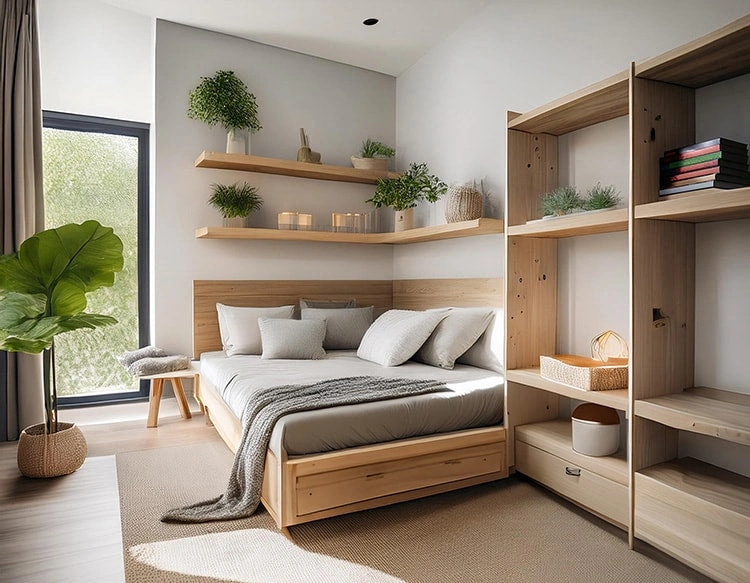

Did you know that physical clutter often leads to mental clutter? Finding small bedroom organization ideas might be more crucial than you think.
Our bedrooms are meant to be a place of comfort, but when clothes pile up and random items clutter every surface, that peaceful retreat can quickly turn into a source of stress. Clutter tends to breed more clutter—once we allow a little to accumulate, it becomes easier to let more in, until we’re overwhelmed by a major mess.
If you’re struggling with bedroom organization ideas that actually work in small spaces, you’re not alone. We’ve found that storage solutions for small bedrooms don’t have to be complex or pricey. In fact, some of the most effective ideas are right in front of you—specifically, under your bed! This often-overlooked space is a goldmine when it comes to organizing small bedrooms.
In this guide, we’ll show you how to organize a small bedroom with expert techniques that make the most of every inch of space. From using under-bed storage for seasonal items to asking yourself key questions like “Would I take this to my dream home?”, these tips will help you create a bedroom that’s spacious, serene, and impeccably organized.
Start with a Clean Slate
The first step toward creating an organized small bedroom involves starting fresh. Beginning with a clean slate helps you assess your space more effectively and create systems that actually work for the long term.
Declutter items you no longer use
Creating space begins with letting go. As one organizer aptly puts it, “We have a choice: we can either have the space or we can have the stuff. We can’t have both.” This mindset shift makes decluttering much easier.
I recommend using the 6-month rule when deciding what stays and what goes. If you haven’t used something in half a year, it’s probably time to part ways with it. Be ruthless in your decision-making to free up space and reduce visual clutter. For clothing specifically, consider asking yourself: “If I was moving into my dream home, would I take this with me?”
Furthermore, make decluttering manageable by starting with obvious items:
- Gather visible trash (crumpled receipts, empty packaging)
- Remove items that clearly belong elsewhere (dirty dishes, books)
- Sort through clothing you no longer wear or enjoy
- Clear out old magazines, broken gadgets, and duplicate items
Sort and categorize everything
Once you’ve decided what stays, organization becomes much simpler. Sort everything into clear categories, grouping similar items together. This “like with like” approach makes it easier to see exactly what you have and prevents duplicate purchases.
Categories to consider include clothing, accessories, books, bedding, and personal care items. This categorization step is essential before buying any storage solutions, as it helps you determine what you actually need to store and how frequently you’ll access each item.
Ask: Does this belong in the bedroom?
Perhaps the most powerful question in organizing a small bedroom is determining what actually belongs there. Essentially, a bedroom should primarily contain items related to sleeping, dressing, and relaxation.
Consequently, many items that migrate to bedrooms should be relocated. Studies show that bedrooms functioning exclusively for rest actually promote better sleep quality. Books, plants, and artwork set the stage for relaxation – not technology and to-do lists.
Take a critical look at what’s accumulated in your bedroom. Consider temporarily removing questionable items to see if their absence improves your space. This simple experiment helps determine what truly deserves valuable bedroom real estate.
Read other Articles – The Beginner’s Guide to Home Workouts Without Equipment (That Actually Work)
Maximize Every Inch of Storage

Image Source: Expand Furniture
Once you’ve decluttered your bedroom, the next challenge is maximizing storage in the space you have. Smart storage solutions can transform even the smallest bedroom into a functional, organized retreat.
Use under-bed bins or drawers
The space beneath your bed represents prime real estate for storage. Interior designer Cristina Cleveland notes, “Under-bed storage is such valuable real estate!” This often-overlooked area can store a surprising amount of items while keeping them hidden from view.
For daily access items, consider plastic drawer units that operate like regular drawers. These glide smoothly, making it easy to retrieve items without frustration. Meanwhile, split-lid containers offer another practical option—you can pull them halfway out to access contents without removing the entire bin.
Choose storage solutions based on how frequently you’ll need the items:
- Rolling drawers or lightweight cases with handles for everyday essentials
- Lidded bins with dust protection for seasonal clothing
- Low-profile containers for rarely accessed items
Add vertical storage with shelves
In small bedrooms, vertical space becomes incredibly important. Wall-mounted storage helps create an uncluttered, stylish look when floor space is limited. Installing floating shelves, pegboards, or tall bookcases draws the eye upward, making your room feel larger while providing ample storage.
SKÅDIS pegboard offers versatile vertical storage that can even function as a bedside table—perfect for loft beds where floor space is precious. Additionally, open shelves near your bed provide convenient storage for bedspreads and decorative pillows.
Choose nightstands with drawers
Upgrade from traditional bedside tables to nightstands with storage. Nightstands with small cabinets or drawers provide more storage than standard bedside tables. These storage-focused options keep surfaces clear while hiding away items you’d rather not display.
Plus, items stored in drawers won’t collect dust as they would on open surfaces. For extremely tight spaces, look for narrow nightstands (up to 20″ wide) that still offer drawer storage.
Use closet organizers and dividers
Make your closet work harder with proper organization systems. Many standard closets offer only a hanging bar and shelf, which doesn’t maximize storage potential. Instead, incorporate a mix of drawers, cubbies, cabinets, and hanging bars to create a customized solution.
Throughout your closet, look for unused spaces—add extra clothing rods, Command hooks, or over-the-door hangers to multiply your storage. Even small adjustments to your closet organization can dramatically increase usable space.
Read other Articles – How to Build Credit From Scratch (Even With No History)
Make the Room Easy to Maintain
Creating organization systems is just half the battle. Especially for small bedrooms, maintaining that tidiness requires smart daily habits and practical solutions.
Keep surfaces clear of clutter
Limiting what sits on your nightstands and dressers automatically makes a bedroom appear more organized. Consider using nightstands with drawers or cabinets to hide away essentials like hand cream, tissues, and electronics. This approach prevents your brain from feeling overwhelmed by visual stimuli when trying to relax.
Set aside one dresser drawer specifically for items that typically flow in and out of your bedroom. This becomes a perfect holding place for clothes needing mending or items you plan to return to someone, preventing them from collecting on surfaces.
Label drawers and bins
Labeling is a powerful yet underutilized organization tool. As organization experts note, “When things are clearly labeled, it makes maintaining the organizing much easier for everyone in the family”.
Options for bedroom labeling include:
- Printable stickers for dresser drawers
- Chalk labels for seasonal storage bins
- Tag labels attached to baskets for kids’ items
These visual cues help everyone know exactly where things belong, making daily cleanup significantly faster.
Use matching hangers for a tidy look
Perhaps surprisingly, uniform hangers create one of the biggest visual impacts in bedroom organization. Matching hangers ensure clothes hang at the same height, making your closet appear instantly more organized.
Velvet (flocked) hangers offer multiple benefits: they prevent clothes from slipping, save valuable space with their slim profile, and prevent hanger marks on delicate fabrics. Their sleek design maximizes closet space while creating a cohesive, intentional look.
Build Long-Term Habits
Maintaining an organized small bedroom requires establishing effective habits. Even the best organization system fails without consistent upkeep. Fortunately, these three simple practices will help keep your space tidy for good.
Keep a donate bin nearby
Placing a donation box directly in your bedroom or closet is perhaps the most effective long-term decluttering strategy. Unlike massive purges, this approach encourages continuous assessment of your belongings. Whenever you notice something you no longer use or wear, immediately place it in the donation bin.
Many organizers recommend repurposing shipping boxes for this purpose. As one expert notes, “Anytime I receive something in mail, the shipping box becomes a donation box!”. Position your bin where it’s easily accessible—perhaps in a closet corner or under hanging clothes.
Set a weekly reset routine
Weekly resets prevent small messes from becoming overwhelming projects. Studies show that clean bedrooms improve sleep quality, help with allergies, and transform the space from a source of stress into a sanctuary.
A simple 15-30 minute weekly bedroom reset might include:
- Putting away any remaining clutter
- Changing and washing bedding
- Emptying trash bins
- Quick dusting of surfaces
This brief investment saves hours of deeper cleaning later. Moreover, breaking maintenance into small daily tasks alongside a weekly reset makes the process manageable rather than daunting.
Reassess your storage every season
Seasonal changes provide perfect opportunities to evaluate your bedroom storage needs. During wardrobe transitions, inspect items for damage and determine if they’re still necessary. As the weather shifts, ask yourself whether unused seasonal items truly deserve valuable space.
This quarterly habit prevents accumulation of unnecessary possessions. Primarily, it ensures your bedroom storage solutions remain effective throughout the year as your needs change.
Conclusion
Transforming a small bedroom from a cluttered stress zone into a peaceful sanctuary actually requires less effort than you might think. Throughout this guide, we’ve explored practical strategies that make organization both achievable and sustainable. Most importantly, creating an organized bedroom starts with honest decluttering – making those tough decisions about what truly deserves your limited space.
Undoubtedly, maximizing storage represents the cornerstone of small bedroom organization. The space under your bed, vertical wall areas, and properly configured closets provide valuable real estate that many people overlook. Additionally, maintaining organization through simple daily habits prevents the discouraging cycle of major clean-ups followed by gradual disorder.
Remember, bedroom organization isn’t just about esthetics – it directly impacts your mental wellbeing. A tidy, clutter-free environment promotes better sleep and reduces stress. Therefore, the time invested in organizing your space pays dividends far beyond just having a neat room.
Finally, organization works best as an ongoing process rather than a one-time project. Small consistent efforts like maintaining a donation bin, performing weekly resets, and seasonal reassessments ensure your bedroom remains a calming retreat year-round. With these practical strategies, even the smallest bedroom can become your favorite space in the home.
FAQs
Q1. How can I maximize storage in a small bedroom? Utilize under-bed storage with bins or drawers, add vertical storage with shelves or pegboards, choose nightstands with drawers, and use closet organizers. These solutions help make the most of available space without cluttering the room.
Q2. What’s the best way to start organizing a small bedroom? Begin with a clean slate by decluttering items you no longer use, sorting and categorizing everything, and asking yourself if each item truly belongs in the bedroom. This process helps you assess your space more effectively and create long-lasting organization systems.
Q3. How often should I reassess my bedroom organization? It’s recommended to reassess your bedroom storage every season. This quarterly habit prevents the accumulation of unnecessary possessions and ensures your storage solutions remain effective as your needs change throughout the year.
Q4. What are some daily habits to keep a small bedroom organized? Keep surfaces clear of clutter, use a donation bin for items you no longer need, and set a weekly reset routine. These habits help maintain organization and prevent small messes from becoming overwhelming projects.
Q5. How can I make my small bedroom feel larger? Use vertical storage to draw the eye upward, keep surfaces clear, and consider using matching hangers in your closet for a tidy look. Additionally, labeling drawers and bins can make the space feel more organized and therefore larger.
Disclaimer
Results may vary based on room size, existing furniture, and individual organizational needs. The strategies shared are general recommendations and may need adaptation to fit your specific situation.
Interested in similar content or opportunities. Contact Us