
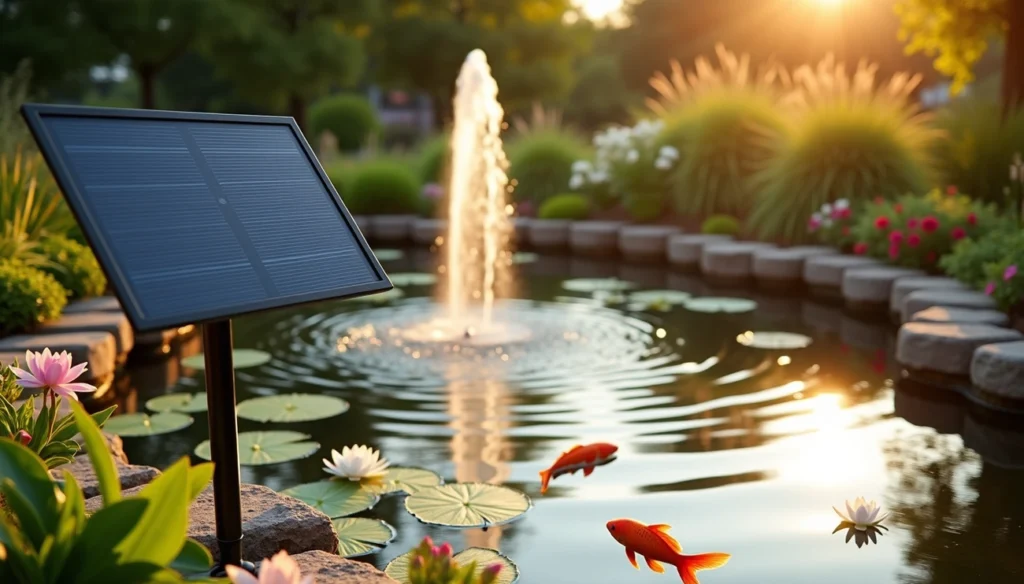

Did you know that a solar-powered pond pump can cost more than three times as much as a traditional low-voltage system? For example, a plug-and-play solar pond pump kit like the PondMax 3,500 LPH system is priced around $500, while a similar low-voltage pump costs only about $150.
When choosing a system for your garden water feature, solar-powered pond filters and pumps offer eco-friendly alternatives to traditional options. However, before investing in a solar-powered pond pump and filter system, it’s important to consider whether it’s the right fit for your specific needs. While the best solar-powered pond pump might seem like the ideal environmentally friendly option, a low-voltage pump will generally be more cost-effective if you have access to mains power within a reasonable distance.
In this article, we’ll cover everything you need to know about solar-powered pond pumps, including when they’re a smart choice, how to select the right system, and whether options like solar-powered pumps with battery backup are worth the investment. Let’s dive in and help you find the perfect solution for your garden pond!
Why Choose a Solar Powered Pond Pump?
Eco-friendly and energy-saving benefits
Solar powered pond pumps operate entirely on renewable energy, creating a sustainable solution for garden water features. Furthermore, these systems reduce energy consumption by up to 89% compared to traditional AC water pumps. By harnessing sunlight instead of grid electricity, solar pumps produce zero emissions and significantly reduce your carbon footprint. Essentially, they offer a cleaner alternative that helps minimize environmental impact while maintaining your pond’s ecosystem.
Ideal for off-grid or remote gardens
One major advantage of solar powered pond pump systems is their ability to function anywhere sunlight reaches. Consequently, they’re perfect for remote areas with no access to electrical outlets. There’s no need for trenching, wiring, or proximity to power sources—simply place the solar panel in a sunny spot and connect it to your pump. This flexibility makes solar pumps especially valuable for gardens located far from conventional power infrastructure.
Long-term cost savings vs. upfront investment
The financial equation for solar powered pond pumps is straightforward: higher initial investment followed by years of free operation. In fact, a standard electric pond pump typically costs around $47 monthly to run, whereas solar systems operate at zero ongoing cost. Although basic solar pump systems range from $90-$700, they quickly pay for themselves through eliminated electricity bills. Additionally, solar pumps typically require less maintenance due to fewer moving parts, further reducing lifetime costs.
Which Pond Type Works Best with Solar?

Image Source: The Pond Guy
Which Pond Type Works Best with Solar?
Selecting the right solar powered pond pump depends largely on your pond type. Each pond ecosystem has unique requirements that affect how well solar power can serve it.
Fish ponds and 24/7 filtration needs
Fish ponds, particularly those with koi or other waste-producing species, require constant filtration. Fish waste needs continuous breakdown by beneficial bacteria, making water movement and aeration essential for maintaining oxygen levels. Since these ponds need pumps running around the clock, a standard solar system alone won’t suffice. Instead, a solar powered pond pump with battery backup becomes necessary to maintain filtration during nighttime and cloudy periods.
Wildlife ponds with natural balance
In contrast, wildlife ponds with minimal or no fish often thrive with limited intervention. These ponds achieve natural balance through abundant plant life that filters water by absorbing nutrients while providing oxygen. For such ecosystems, solar pumps aren’t essential but can enhance water quality. The intermittent operation of basic solar powered pond pumps works well here since 24/7 filtration isn’t critical.
Hybrid ponds using both plants and pumps
Many garden ponds benefit from a combined approach. These hybrid systems utilize both plant-based purification alongside mechanical filtration. A solar pump operating during daylight hours, paired with strategic plant placement, creates an efficient, low-maintenance system. Some pond owners employ solar pumps for fountains or secondary features while using traditional systems for primary filtration—balancing sustainability with consistent water quality.
How to Select the Right Solar Pump System

Image Source: Volunteer Village – EWB-USA
How to Select the Right Solar Pump System
Selecting an appropriate solar powered pond pump requires careful consideration of several factors to ensure optimal performance throughout the year.
Understanding flow rate and pond size
For a healthy pond, your pump should circulate the entire water volume once every hour. For instance, a 2,000-gallon fish pond needs a pump with at least 2,000 GPH (gallons per hour) capacity. Generally, smaller ponds under 200 gallons work well with 6W-8W solar pumps, while medium ponds (200-400 gallons) need 10W-12W models.
Choosing the right solar panel wattage
The solar panel’s wattage should be at least 1.3 to 1.5 times the pump’s wattage rating. This “over-paneling” ensures reliable performance even in lower light conditions. Most basic solar pump kits include panels producing around 20 watts, sufficient for small water features generating 160-360 GPH.
Do you need a battery backup?
A battery backup becomes essential when:
- You have a fish pond requiring 24/7 filtration
- Your location experiences frequent cloudy weather
- You want consistent operation after sunset
Battery backups can provide 7-10 hours of continuous running after sunset, albeit usually at reduced performance (approximately 20% lower flow rate).
Comparing solar vs. low-voltage systems
Solar pond pumps generally have lower flow rates compared to traditional electric pumps. Moreover, standard electric pumps consuming 230 watts can cost $1.60-$2.00 daily ($45-$60 monthly), whereas solar pumps eliminate ongoing energy costs after initial investment.
Tips for energy-efficient pump selection
Q1: What’s the most important spec when choosing a solar pump? A1: The GPH (gallons per hour) rating is perhaps the most important specification, as it tells you exactly how much water the pump can move.
Disclaimer: Performance of solar powered pond pumps varies based on geographical location, seasonal changes, and weather conditions. Consult with a professional for site-specific recommendations.
Read more Articles:
Real-World Examples and Setup Tips
Building your own solar powered pond system is surprisingly straightforward once you understand the basics. I’ve gathered some practical examples to help you get started with your project.
DIY solar pond with stream and filter
Creating a DIY solar pond with filtration is simpler than you might think. One successful approach involved building a 70-liter container filter filled with aquaponic clay balls for biological filtration. The key components included a Uni-Seal for water-tight connections and a breather pipe to prevent backflow when the pump stops. Accordingly, the filter was designed with a cleanout portal for easy maintenance—a crucial feature for any pond system.
Using solar powered pond pump with battery backup
Battery backup systems extend pump operation into evening hours. For ponds under 320 gallons, an 80 GPH pump with 9V battery backup works effectively. These systems typically provide 7-10 hours of operation after sunset, though often at reduced flow rates. Specifically, many gardeners choose lithium-ion batteries for their longevity and better cold-weather performance compared to lead-acid alternatives.
Designing for seasonal sunlight changes
Panel placement is vital for year-round performance. For fixed-mount panels, a tilt angle equal to your latitude works best for all-year operation. Alternatively, adjusting seasonally (latitude minus 15° for summer, plus 15° for winter) maximizes efficiency. During winter, expect reduced performance from shorter days and lower sun angles.
Q1: How do I test my solar pump before installation? A1: Perform a “bucket test” with the pump, splice, and wire accessible before dropping it down a well or pond.
Disclaimer: Solar pump performance varies with geographical location and weather conditions.
Conclusion
Solar powered pond pumps offer a perfect blend of sustainability and functionality for garden enthusiasts seeking eco-friendly alternatives. Throughout this article, we’ve explored how these systems provide significant environmental benefits while eliminating ongoing electricity costs. Additionally, their versatility makes them ideal for remote locations without easy access to grid power.
Nevertheless, the right choice depends largely on your specific pond ecosystem. Fish ponds generally require 24/7 filtration, therefore making battery backup systems essential, while wildlife ponds can thrive with the intermittent operation of standard solar pumps. Hybrid approaches often provide the best of both worlds, balancing natural filtration with solar-powered mechanical support.
Before purchasing any system, you should carefully consider your pond size, local sunlight conditions, and filtration needs. Although solar systems involve higher upfront costs compared to traditional pumps, they quickly pay for themselves through eliminated electricity bills and reduced maintenance requirements. Panel placement and seasonal adjustments likewise play crucial roles in maximizing system efficiency year-round.
The transition to solar power represents more than just cost savings—it reflects a commitment to sustainable gardening practices. After all, a well-designed solar pond system creates a self-sustaining ecosystem that benefits both your garden and the planet. Whether you choose a simple solar fountain or a comprehensive pump and filter system with battery backup, solar technology offers a reliable, earth-friendly solution for pond owners.
We hope this guide has helped clarify when and how solar powered pond pumps make sense for your garden. The initial investment might seem significant, but the long-term benefits—both environmental and financial—certainly make solar power worth considering for your pond’s future.
FAQs
Q1. How long can I expect a solar powered pond pump to last? With proper maintenance, quality solar powered pond pumps typically last 2-3 years. The solar panels themselves often come with 20-25 year warranties.
Q2. Can solar powered pond pumps operate during winter months? Most basic models should be removed during freezing temperatures to prevent damage. High-end systems with battery backup can operate year-round in milder climates, but at reduced efficiency.
Q3. What maintenance is required for a solar powered pond pump? Regular maintenance includes cleaning solar panels monthly with water and mild soap, and inspecting the pump impeller quarterly for debris or buildup to ensure optimal performance.
Q4. Do solar powered pond pumps come with different fountain options? Yes, most solar powered pond water pumps include multiple fountainhead attachments, typically offering 4-6 different spray patterns to choose from.
Q5. What’s the main drawback of using a solar powered pond pump? The primary disadvantage is inconsistent performance due to weather dependency. This is why the best solar powered pond pump systems often include battery backup for continuous operation.
Disclaimer
This disclaimer provides important information about solar pond pump systems that potential users should understand. Nonetheless, the article is published for general informational purposes only and does not constitute professional advice. Any actions taken based on this information are strictly at your own risk.
Ultimately, solar powered pond pumps require direct sunlight to function properly. The standard models operate six to nine hours on sunny days and not at all during cloudy periods. Unfortunately, not all systems are compatible with battery backups – notably, lower wattage models like 25W cannot use batteries, while 50W and 100W models can but with significant limitations.
Interested in similar content or opportunities. Contact Us