
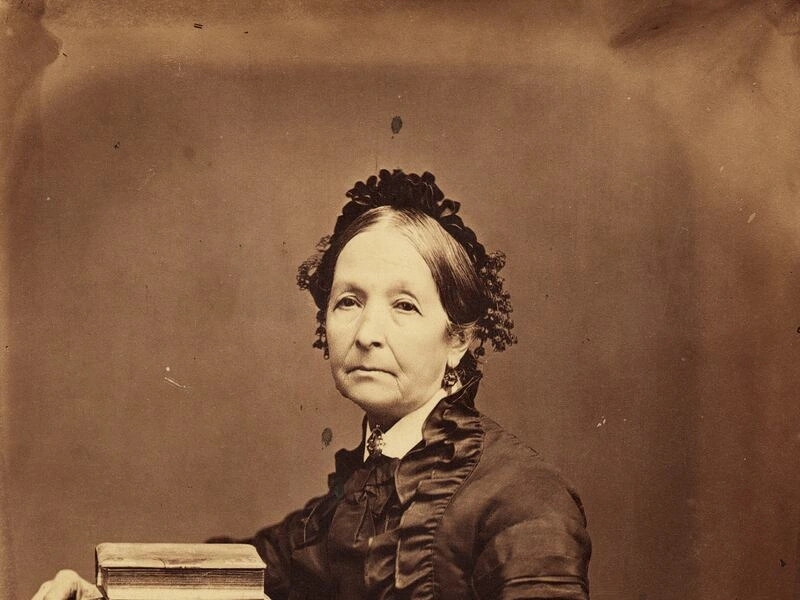

Zina Huntington remains one of the most fascinating yet overlooked figures in early Mormon history. Born in 1821, she carved a remarkable path through the formative years of the Latter-day Saint movement, ultimately becoming the third general president of the Relief Society from 1888 until her death in 1901. What makes her story particularly compelling is how she navigated the complex social and religious landscape of 19th-century America.
Looking deeper into her life, we find a woman who practiced polyandry as the wife of Joseph Smith and later Brigham Young, while still married to her first husband, Henry Jacobs. Zina Diantha Huntington Young also made significant contributions to healthcare in Utah Territory by helping establish the Deseret Hospital and founding a nursing school. She joined the LDS Church at just 18 years old when her family arrived in Nauvoo in 1839 after fleeing persecution in Missouri.
Most notably, between 1841 and 1850, Zina experienced three marriages, participated in both polyandry and polygamy, helped establish settlements, and gave birth to three children by two different husbands—all within a single decade. Additionally, she was an advocate for women’s suffrage, serving as vice president of the Utah chapter of the National Council of Women.
In this article, we’ll explore the extraordinary journey of this LDS pioneer who not only contributed to the early days of the Mormon faith but also championed the rights of women and made lasting contributions to her community and beyond.
Early Life and Conversion to the LDS Faith
Family background and upbringing in New York
Zina Diantha Huntington’s story begins in Watertown, New York, where she was born on January 31, 1821. Her family boasted an impressive American heritage—her ancestors were Puritan emigrants who sailed for America in 1633, and her family tree included Samuel Huntington, a signer of the Declaration of Independence. Her father William, a veteran of the War of 1812, had cleared three hundred acres to establish their family farm, where they lived in a comfortable story-and-a-half stone house.
As a young girl growing up in rural New York, Zina received education typical for her gender and class. She mastered essential domestic skills including spinning wool, churning butter, soap making, weaving, and sewing—all learned by watching her mother’s example. Beyond these practical abilities, she developed a talent for music, learning to play the cello.
Despite her “pleasant childhood” on their prosperous farm, young Zina sometimes yearned for something more meaningful than her routine life. She once wrote that she wished “to have been born in a day when something was going on in the nations of the Earth… some enterprise beyond that sabbath meeting schools”.
Conversion during the Great Awakening
The Huntington household fostered deep religious devotion. Consequently, the family spent most evenings reading from the Bible. During this period of the Second Great Awakening—a time of intense religious revival—Zina’s mother wrote about “revivals of religion all around us” and how “the Lord has visited our family with his good spirit”.
In 1835, Mormon missionaries Hyrum Smith and David Whitmer visited the Huntingtons. The family had been searching for spiritual truth, with Zina’s father previously concluding that “none of the churches were right because none of them had prophets, apostles, or spiritual gifts”. Upon encountering the Book of Mormon, fourteen-year-old Zina had a profound spiritual experience, later recounting: “I pressed it to my bosom in a rapture of delight, murmuring as I did so, ‘This is the truth, truth, truth!'”.
Move to Kirtland and Nauvoo with her family
Following their conversion, the entire Huntington family except for her eldest brother was baptized into the Church of Latter Day Saints. Zina herself was baptized by Hyrum Smith on August 1, 1835[62][33]. In October 1836, following Joseph Smith Sr.’s advice, her father sold their property, and the family relocated to the church headquarters in Kirtland, Ohio.
Throughout their time in Kirtland, Zina participated in the Temple choir and received spiritual gifts including speaking in tongues. On one notable occasion in the Kirtland temple, “she heard a whole invisible choir of angels singing, till the house seemed filled with numberless voices”.
The Huntingtons subsequently moved to Far West, Missouri, in 1838, arriving during heightened tensions between Missourians and Mormon settlers[62]. After eleven months of persecution in Missouri, they sought refuge in Nauvoo, Illinois, where Zina arrived in 1839 at the age of eighteen.
Zina Huntington’s Marriages and the Complexity of Plural Sealing

Image Source: YouTube
Zina Huntington’s Marriages and the Complexity of Plural Sealing
The marital journey of Zina Huntington stands as one of the most intricate examples of early Mormon marriage practices. Her relationships illustrate the complex interweaving of religious duty, personal choice, and the emerging doctrine of celestial marriage.
Marriage to Henry Jacobs
On March 7, 1841, Zina married Henry Bailey Jacobs in a ceremony performed by Joseph Smith himself. Henry, a faithful member of the Church and talented musician, seemed an ideal match for the musically-gifted Zina. Their union appeared traditional at first, yet would soon be complicated by new religious understandings.
Sealing to Joseph Smith while married to Henry
Merely seven months into her marriage with Henry, on October 27, 1841, Zina was sealed to Joseph Smith for eternity. This occurred after Joseph had reportedly received a divine revelation directing him to practice plural marriage. Though legally married to Henry, Zina accepted this spiritual sealing based on her faith in Joseph’s prophetic calling.
Marriage to Brigham Young after Joseph’s death
Following Joseph Smith’s martyrdom in 1844, Zina was sealed “for time” to Brigham Young in 1846. This occurred while Henry Jacobs was away on a mission assignment. Upon his return, Henry discovered that Zina had become Brigham’s wife. Eventually, Henry was instructed to find another wife, which ultimately led to their separation.
Emotional and spiritual struggles with plural marriage
Throughout these transitions, Zina faced profound internal conflicts between her feelings for Henry and her religious commitments. She once remarked that plural marriage was “a principle which crucifies the flesh in its tenderest parts.” Nevertheless, she remained steadfast in her religious convictions despite personal sacrifices.
Zina Huntington marriage timeline and transitions
Zina’s marriages spanned from her first union with Henry (1841), through her sealing to Joseph (1841), to her long-term marriage to Brigham Young (1846-1877). With Brigham, she bore one daughter, Zina Young Card, becoming a respected plural wife in his household. Indeed, Zina navigated these relationships with remarkable grace amid extraordinary circumstances.
Spiritual Gifts and Healing Ministry
Spiritual Gifts and Healing Ministry
Beyond her complex marital relationships, Zina Huntington developed remarkable spiritual capabilities that defined her ministry throughout her life.
Speaking in tongues and prophecy
Shortly after her baptism, Zina received the gift of tongues so suddenly and powerfully that she initially hesitated to use it. After earnest prayer, she resolved never to silence this gift again, keeping this vow throughout her life. Her ability to interpret tongues was equally impressive, with Emmeline B. Wells noting that she possessed “perhaps as perfect a gift of interpretation of tongues as any person in the church”. Moreover, in the Kirtland Temple, Zina once heard “a whole invisible choir of angels singing, till the house seemed filled with numberless voices”.
Role as a healer and midwife
Zina learned the art of healing from her mother, mastering both physical care and faith healing. As an experienced midwife, she delivered hundreds of babies throughout the Utah settlements. Furthermore, at Brigham Young’s request, she studied obstetrics under Dr. Romania B. Pratt, ultimately attending nearly all births of Young’s more than 50 children.
Female-led blessings and rituals in early LDS Church
In line with Joseph Smith’s teachings that healing gifts were available to “all that believe whether male or female”, Zina often anointed women with oil and gave blessings before childbirth. Although these practices gradually declined in the early 20th century, they represented an important aspect of early Mormon women’s spiritual authority.
Zina the comforter: her reputation among women
Known affectionately as “Zina, the comforter,” she gained widespread recognition for her “sympathy, tenderness, and personal ministering”. Accordingly, she would “seek out the poor, lift the weary, aid the sick, and love them all”. Her friend Emmeline B. Wells described her as “a ministering angel” in the sickroom who “invariably inspired confidence” and seemed “inspired by some higher power”.
Read other Articles – Mud Dauber Wasp (Opifex fuscus): Unusual Mating Behaviors Explained
Leadership in the Relief Society and Public Life

Image Source: Latter-day Saint Insights
Leadership in the Relief Society and Public Life
Throughout her adult life, Zina Huntington steadily ascended through leadership ranks, ultimately shaping institutions that would outlast her lifetime.
Becoming the third Relief Society General President
After serving as treasurer of the Salt Lake City Relief Society from 1866, Zina became first counselor to Eliza R. Snow in 1880. Upon Snow’s death, she was appointed the third general Relief Society president in April 1888. Under her 13-year leadership, she organized the first Relief Society General Conference in 1889. Contemporaries noted that “Sister Snow was keenly intellectual… Sister Zina was all love and sympathy”.
Founding Deseret Hospital and nursing school
Zina helped establish Deseret Hospital in 1872 and served as its president from 1880-1892. Additionally, she organized a nursing school, taught obstetrics courses, and directed a school of obstetrics in Salt Lake City during the 1850s.
Involvement in the women’s suffrage movement
Concurrently, Zina advocated for women’s rights, attending the Women’s Conference in Buffalo and the National Woman Suffrage Association convention in New York in 1881. In 1891, she was appointed vice president of the National Council of Women.
Zina Huntington LDS pioneer legacy in Utah
Beyond these roles, Zina taught Sunday School for 40 years, presided over the Deseret Silk Association from 1876, and served as matron of the Salt Lake Temple after its 1893 dedication. She remained active in public service until her death in 1901 at age 80.
Conclusion
Zina Huntington’s remarkable journey stands as a testament to the profound complexity and resilience of early Mormon women. Throughout her 80 years, she transformed from a young convert seeking spiritual fulfillment into one of the most influential female figures in LDS history. Certainly, her navigation of plural marriage represents one of the most intricate examples of how early Saints balanced personal desires with religious convictions. Her willingness to enter celestial marriage, despite the emotional turmoil it caused, demonstrates the depth of her faith and commitment to her religious community.
Additionally, Zina’s spiritual gifts set her apart as an exceptional healer and comforter. Her ability to speak in tongues, interpret spiritual messages, and bring physical relief to the suffering earned her widespread respect among pioneers. Therefore, we can understand why she became known as “Zina the comforter” – a title that captured her essence far better than any formal designation.
Beyond her spiritual contributions, Zina helped shape the institutional foundation of women’s work in Utah. After all, her establishment of Deseret Hospital, nursing schools, and leadership of the Relief Society created lasting structures that supported women’s health and community welfare for generations. Meanwhile, her advocacy for women’s suffrage linked Mormon women to broader American movements for equality.
Undoubtedly, Zina’s life reveals the unexpected ways women could exercise authority and leadership within a patriarchal religious system. Though married to two church presidents, she carved her own distinct path, using her positions to amplify women’s voices rather than simply existing in the shadow of powerful men.
Zina Huntington ultimately exemplified how faith, service, and pragmatism could blend together in frontier America. Her story challenges simplistic views of Mormon women as merely subordinate figures. Instead, she shows us a woman who, despite the limitations of her era, managed to build institutions, heal the sick, fight for women’s rights, and nurture a spiritual community. This pioneering woman leaves a legacy that continues to resonate with anyone seeking to understand the complex interplay of gender, religion, and leadership in American history.
FAQs
Q1. Who was Zina Huntington and what was her role in early Mormon history? Zina Huntington was a prominent figure in early Mormon history, serving as the third general president of the Relief Society from 1888 to 1901. She was known for her spiritual gifts, healing ministry, and leadership in women’s organizations. Zina also played a significant role in establishing healthcare institutions in Utah Territory.
Q2. What were Zina Huntington’s most notable contributions to the LDS Church? Zina Huntington made significant contributions to the LDS Church, including her leadership in the Relief Society, founding of Deseret Hospital and a nursing school, and her involvement in the women’s suffrage movement. She was also known for her spiritual gifts, particularly her ability to speak in tongues and her reputation as a healer and midwife.
Q3. How did Zina Huntington’s marriages reflect the complex marriage practices in early Mormon history? Zina Huntington’s marital history exemplifies the complexity of early Mormon marriage practices. She was first married to Henry Jacobs, then sealed to Joseph Smith while still married to Jacobs, and later married Brigham Young after Joseph Smith’s death. This illustrates the practice of plural marriage and the concept of eternal sealing in early LDS doctrine.
Q4. What was Zina Huntington’s role in healthcare and women’s rights in Utah? Zina Huntington played a crucial role in healthcare and women’s rights in Utah. She helped establish Deseret Hospital, founded a nursing school, and taught obstetrics. Additionally, she was involved in the women’s suffrage movement and served as a vice president of the National Council of Women, advocating for women’s rights and equality.
Q5. How did Zina Huntington’s spiritual gifts impact her ministry and reputation? Zina Huntington was renowned for her spiritual gifts, particularly her ability to speak in tongues and interpret them. She was also known as a skilled healer and midwife, earning her the affectionate title “Zina the comforter.” Her spiritual abilities and compassionate nature made her a respected and beloved figure among early Mormon settlers, especially women seeking comfort and healing.
Interested in similar content or opportunities. Contact Us