
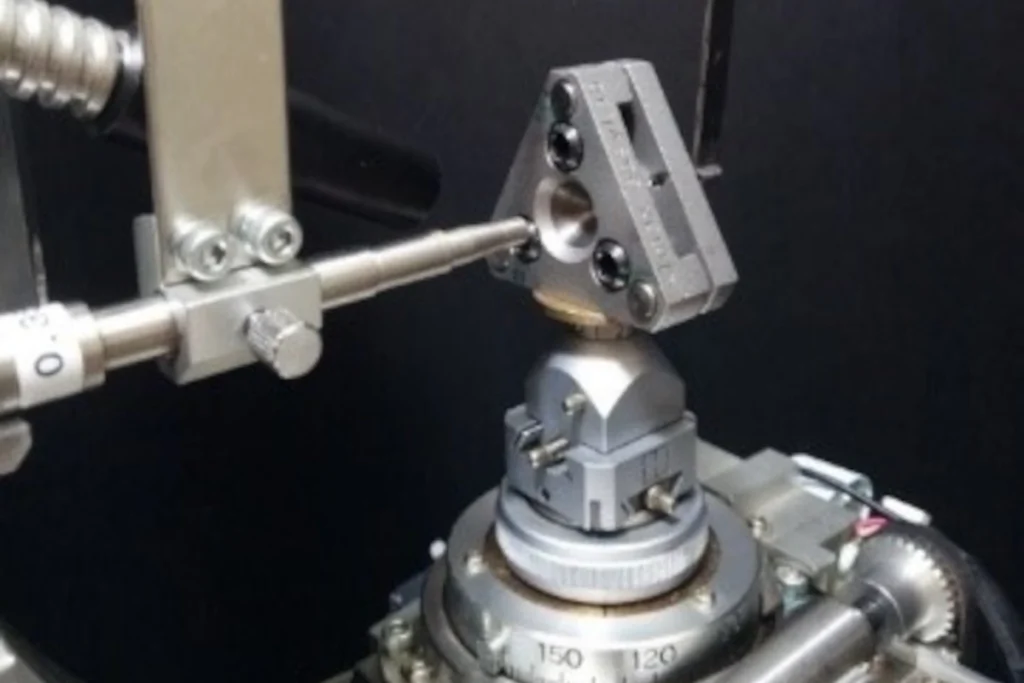

Groundbreaking evidence of near-ambient superconductivity has been achieved in a laboratory, potentially marking one of the most significant breakthroughs in materials science this century. Scientists have recently reported superconductivity in a nitrogen-doped lutetium hydride with a critical transition temperature of 294 K (around 21°C) at just 10 kbar pressure. This breakthrough suggests that superconductivity at room temperature and near-ambient pressures is no longer just a theoretical concept.
For decades, we’ve understood superconductivity as the complete absence of electrical resistance in certain materials, but realizing this at practical temperatures has remained a challenge. Before this achievement, cuprates held the record for the highest critical temperatures at ambient pressures, reaching only about 133 K (around -140°C). The discovery has been validated through resistance testing and magnetic field responses, confirming its authenticity. The compound was synthesized under high-pressure and high-temperature conditions before being recovered for further analysis. This new evidence of near-ambient superconductivity in nitrogen-doped lutetium hydride could have transformative implications for industries like transportation, energy storage systems (such as superconducting magnetic energy storage), and computing.
Scientists Synthesize N-doped Lutetium Hydride Under High Pressure
The creation of nitrogen-doped lutetium hydride represents a critical step toward achieving near-ambient superconductivity. Researchers have developed multiple synthesis methods to produce this promising material.
How the compound was created in the lab
The most widely reported approach involves a precise chemical reaction. Researchers created a gas mixture of 99 percent hydrogen and one percent nitrogen, combined it with a pure lutetium sample, and allowed the components to react for two to three days at 392 degrees Fahrenheit. Alternatively, some teams employed high-pressure high-temperature (HPHT) synthesis using specialized equipment. In this method, lutetium pieces were placed in one layer of a high-pressure cell, while a mixture of NH4Cl and CaH2 in a 2:8 molar ratio served as nitrogen and hydrogen sources in another layer. The assembly was then heated at 773K for 5-7 hours under pressures of 3 GPa. Other researchers successfully created the compound using lutetium hydride (LuH2) and potassium azide (KN3) with tantalum foil separation.
What makes nitrogen doping significant
Nitrogen doping proves crucial for enhancing superconductivity characteristics. According to researchers, nitrogen creates a more stable, cage-like lattice structure within the material and hardens low-frequency optical phonons. These properties provide the stability necessary for superconductivity to occur at lower pressures than previously possible. Additionally, lutetium itself contributes key properties with its highly localized fully-filled 14 electrons in f orbital configuration that suppress phonon softening while enhancing electron-phonon coupling—both essential for ambient temperature superconductivity.
Visual phase changes observed during compression
Perhaps the most striking characteristic of nitrogen-doped lutetium hydride is its dramatic color transformation under pressure. Initially presenting a lustrous blue color, the compound undergoes sequential color changes when compressed in a diamond anvil cell. As pressure increases, researchers observed transitions from blue to royal blue, then purplish blue around 8.2 GPa, followed by purple at approximately 10.5 GPa. The critical pink phase—associated with superconductivity—emerges at around 16 GPa, remaining stable across a 7 GPa span. Subsequently, the material transforms into a vivid red color at higher pressures. Remarkably, these color changes are completely reversible during decompression, with the sample gradually returning to its original blue color when pressure is fully released.
Read other Articles – The Ultimate Guide to Curb Appeal Ideas That Won’t Break Your Budget
Researchers Measure Superconductivity at Near-Ambient Conditions

Image Source: Nature
Measuring superconductivity requires specific techniques to confirm this quantum state in materials. Scientists employ several complementary methods to verify that materials like nitrogen-doped lutetium hydride exhibit true superconducting properties.
How to measure superconductivity: resistance and magnetization
Confirming superconductivity involves multiple testing approaches to validate this extraordinary quantum state. Primary measurement techniques include:
- Resistivity measurements: Using four-point probe or van der Pauw methods to eliminate contact resistance effects and accurately measure electrical resistance
- Magnetization measurements: Detecting changes in magnetic response using SQUID (Superconducting Quantum Interference Device) or VSM (Vibrating Sample Magnetometer)
- Heat capacity analysis: Examining specific heat anomalies at the transition temperature
These complementary techniques provide comprehensive verification of superconducting behavior beyond what any single measurement could offer.
Evidence of zero resistance at 294 K and 10 kbar
The most compelling evidence for near-ambient superconductivity in nitrogen-doped lutetium hydride comes from resistance measurements showing zero electrical resistance at approximately 294 K (21°C) under pressure of just 10 kbar (1 GPa). Researchers observed sharp resistance drops within a temperature change of merely a few degrees Kelvin. Nevertheless, independent attempts to replicate these findings have produced conflicting results, as certain research teams report no superconductivity detected below 40.1 GPa and above 2 K.
Magnetic susceptibility and Meissner effect confirmation
Magnetic measurements revealed diamagnetic response—a hallmark of superconductivity—through alternating current (a.c.) susceptibility tests. The onset of a well-defined Meissner effect was observed at approximately 277 K at around 8 kbar. This effect, where materials expel external magnetic fields, represents a macroscopic manifestation of quantum mechanical properties.
Heat capacity anomalies supporting superconducting state
Heat capacity measurements provide thermodynamic evidence for superconductivity. Researchers detected specific heat anomalies characteristic of BCS model superconductors, which exhibit energy gaps associated with Cooper pair formation. This manifests as a distinctive spike in specific heat at the critical temperature. However, other researchers have placed upper limits on heat capacity signatures of any secondary transition at just a few percent of the primary superconducting transition.
Material Structure Reveals Clues to Superconducting Behavior
Structural analysis provides essential insights into why nitrogen-doped lutetium hydride exhibits extraordinary superconducting properties. Advanced characterization techniques reveal the atomic architecture underlying this phenomenon.
XRD and EDX analysis of the compound
X-ray diffraction patterns confirm the formation of distinct crystal structures in superconducting samples. Synchrotron-based X-ray diffraction imaging has revealed microscale structural inhomogeneity across samples. Le Bail refinements of hydrogenated samples yielded lattice parameters of a = 5.15(1) Å for cubic phases and a = 3.71(1) Å, c = 5.54(1) Å for hexagonal phases. Simultaneously, energy dispersive X-ray spectroscopy confirms the elemental composition, with atomic percentages of carbon increasing with graphene addition from 7.57% to 10.54% in some studied systems.
DFT simulations and predicted lattice distortions
Density functional theory calculations demonstrate that substituting lead with copper causes contraction-induced strain in crystal lattices. This strain effect likely generates internal pressure on cation columns from which superconductivity emerges. Specifically, electronic configuration changes from closed-shell Pb²⁺(6s²) to open-shell Cu²⁺(3d⁹) provide empty electronic states enabling charge movement.
Role of hydrogen and nitrogen atom positions
Nitrogen substitution occurs primarily on tetrahedral sites within the structure. Molecular dynamics simulations show hydrogen atoms tend to form molecules at low temperatures, with H₂ molecules forming spontaneously at approximately 15K. These molecules appear extremely robust against dissociation. Essentially, nitrogen dopants free hydrogen atoms that can bond independently, forming H₂ molecules.
Comparison with known hydride superconductors
The structural stability resembles that of LaH₁₀, although yttrium substitution extends structural stability to lower pressures than observed in undoped systems. Both cubic and hexagonal clathrate phases persist across pressure ranges from 168-136 GPa. Consequently, these nitrogen-doped hydride structures demonstrate persistent coexistence rather than distinct pressure-stabilized states.
Read other Articles – How to Organize a Small Bedroom: Expert Tips That Actually Work
Experts Question Data Integrity and Call for Replication
Despite promising results, the scientific community remains divided over recent claims of near-ambient superconductivity in lutetium hydride compounds, primarily due to ongoing controversies surrounding data integrity.
Retraction history and data transparency concerns
The credibility of superconductivity research faces significant challenges after multiple high-profile retractions. In fact, Nature retracted a separate room-temperature superconductivity claim from Dias’s group amid allegations of data manipulation. Further concerns emerged when Physical Review Letters attached an expression of concern to a paper under investigation for questions about “the integrity of the data”. Beyond data issues, accusations of plagiarism have surfaced, with researchers discovering several passages in Dias’s websites identical to at least three other sources. A 10-month investigation by Rochester University concluded Dias had committed “numerous instances of research misconduct” including “intentional data fabrication”.
Independent replication attempts and conflicting results
Efforts to validate the findings have yielded inconsistent outcomes. Several research groups have failed to replicate Dias’s latest superconductivity claim. Nonetheless, some support emerged from Hemley, who reported evidence for superconductivity as high as 276 K at 15 kbar after measuring electrical resistance of samples prepared by Dias’s team. Critics point to specific concerns about data processing, especially regarding background subtractions applied to resistance measurements. Furthermore, theorists found themselves struggling to explain the high-temperature superconductivity claimed in these materials.
What this means for the field of superconductivity
The controversies have cast shadows over superconductivity research. As one physicist noted, this saga is “damaging to science in general, and superconductivity research more so”. Moreover, funding for high-pressure research could potentially suffer despite it being “a fruitful area with many exciting recent developments”. Hence, some scientists believe these controversies have caused the field to be “not in good shape”, potentially deterring young researchers and funding agencies from pursuing this promising area of study.
Conclusion
The quest for room-temperature superconductivity has undoubtedly reached a pivotal moment with nitrogen-doped lutetium hydride showing extraordinary promise. Nevertheless, this field now stands at a scientific crossroads. On one hand, measurements indicating zero electrical resistance at 294K under just 10 kbar pressure represent what could become one of the most transformative material science discoveries of our century. Additionally, the comprehensive characterization through resistance testing, magnetic susceptibility, and heat capacity analyzes offers compelling evidence for genuine superconducting properties.
The synthesis methods developed for creating this compound deserve particular attention. Scientists have successfully employed multiple approaches, from precise hydrogen-nitrogen gas mixtures to high-pressure high-temperature techniques. Consequently, researchers now possess several pathways to potentially replicate these remarkable findings. The dramatic color transitions observed during compression, meanwhile, provide fascinating visual indicators of the material’s changing electronic states.
Despite these promising developments, the field faces significant challenges. Data integrity concerns and retraction history cast shadows over recent claims. Furthermore, conflicting results from independent replication attempts highlight the need for rigorous verification before widespread acceptance. The scientific community therefore remains divided, with some researchers offering support while others express profound skepticism about the validity of the reported findings.
Looking ahead, this research will certainly require extensive validation through transparent, reproducible experiments across multiple laboratories. Only then can we determine whether nitrogen-doped lutetium hydride truly represents the long-sought breakthrough in ambient superconductivity. Still, the theoretical foundations and experimental approaches developed throughout this investigation will likely advance our understanding of superconducting materials regardless of the final outcome.
The potential applications, should these findings prove accurate, would transform numerous industries from power transmission to computing. However, scientific progress demands both excitement about possibilities and healthy skepticism until definitive evidence emerges.
FAQs
Q1. What is the significance of the recent superconductivity discovery? Scientists have reported evidence of superconductivity in a nitrogen-doped lutetium hydride at near room temperature (294 K) and relatively low pressure (10 kbar), which could potentially revolutionize various industries if confirmed.
Q2. How was the superconducting material created? The compound was synthesized using methods like combining lutetium with a hydrogen-nitrogen gas mixture, or through high-pressure high-temperature synthesis using lutetium, NH4Cl, and CaH2 in specialized equipment.
Q3. What techniques were used to measure superconductivity? Researchers employed multiple methods, including resistivity measurements, magnetization tests using SQUID or VSM, and heat capacity analysis to comprehensively verify superconducting behavior.
Q4. What unique properties does the material exhibit? The nitrogen-doped lutetium hydride undergoes dramatic color changes under pressure, transitioning from blue to pink and then red. It also shows zero electrical resistance and a Meissner effect at specific temperatures and pressures.
Q5. Why is there controversy surrounding this discovery? The scientific community is divided due to data integrity concerns, previous retractions in the field, and conflicting results from independent replication attempts. Some researchers support the findings, while others express skepticism about their validity.
Disclaimer
The information presented in this article represents ongoing research that has not yet received universal scientific consensus. Future studies may confirm, refine, or contradict these findings as the scientific process continues.
Interested in similar content or opportunities. Contact Us